AI Agents for Enterprises: a practical guide to adoption that holds up
An AI agent is a software system that pursues a goal on your behalf, deciding its own steps, drawing on tools and data as it needs them, and acting with limited supervision. That last part is what sets it apart. _A chatbot responds to a prompt. An agent carries work through a system. It can work a support ticket through to resolution, reconcile a batch of invoices, or run a procurement check and place the follow-up, adjusting as the situation shifts rather than following one fixed script.
Most writing on AI agents is aimed at engineers or at the simply curious. This guide is for the enterprise that has to decide whether, where, and how to adopt them. It covers what agents are, the kinds you will meet, what sits inside them, where they earn their keep, and the few questions that separate a useful rollout from an expensive experiment.
Agents, assistants and the agentic shift
It helps to set three terms beside one another. A generative AI tool produces something when prompted: text, code, an image. An AI assistant goes further, holding a conversation and helping with tasks, but it waits for you to drive. An AI agent takes an objective and pursues it, choosing actions and using tools to reach the outcome. The step from generative AI to agentic AI is the step from a system that responds to one that acts.
The difference between AI agents and AI assistants matters in practice, because it changes what you have to govern. An assistant suggests; an agent commits. The moment software can take an action in a live system, the questions of trust, limits and accountability stop being theoretical.
The types of AI agents you will meet
Not every agent is sophisticated, and that is a strength rather than a shortcoming. The simplest, a reflex agent, answers a condition with a fixed response, which suits cases where the rule is clear and stable. A model-based agent holds an internal picture of its environment, so it can act sensibly even when it cannot see everything at once. A goal-based agent weighs its options against an objective and chooses the path towards it. A utility-based agent takes one step further, balancing competing aims such as cost and speed to land on the best overall result.
Knowing the types of AI agents is not an academic exercise. It tells you how much autonomy a given task deserves and how much oversight it needs. A great deal of real value sits at the simpler end, where the outcome is predictable and the risk stays contained.

What sits inside an agent
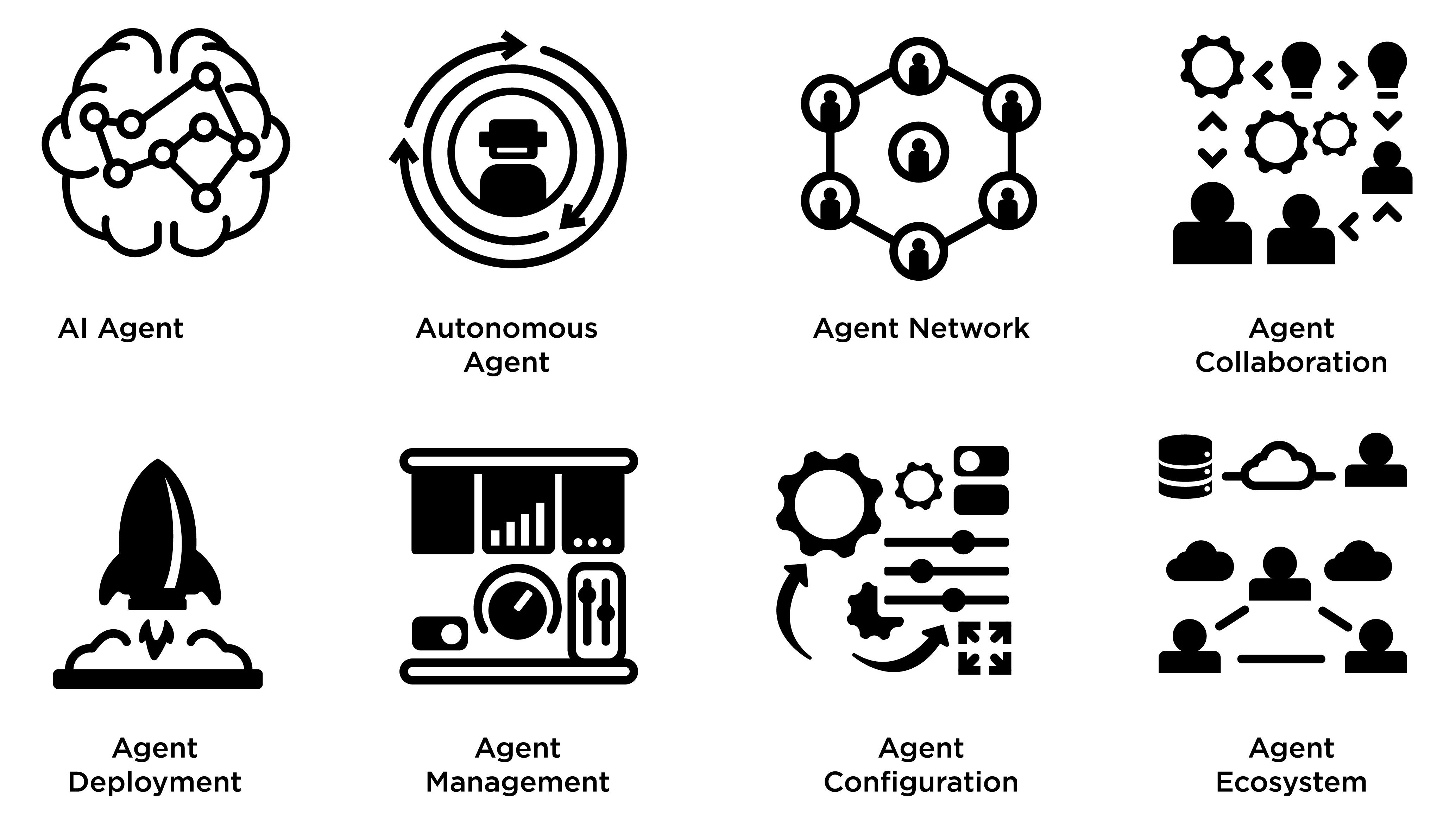
An agent is less a single model than a set of working parts. Perception takes in data from systems, documents and signals. Reasoning and planning break a goal into steps and settle their order. Memory carries context from one action to the next, so the agent does not start cold each time. Tool calling lets it reach past its own knowledge to query a database, trigger a workflow or run a calculation.
Connect several agents and you have a multi-agent system, where each handles part of a larger job and they co-ordinate through agentic workflows. Keeping that co-ordination sane across a growing estate is the work of AI agent orchestration, and it is where many enterprises quietly lose their grip as pilots multiply. A related technique, agentic RAG, lets an agent draw on several sources of your own information before it answers, which is what makes its output specific to your business rather than generic.
Where AI agents earn their place
The strongest early use cases share a shape: high volume, clear edges, and a measurable outcome. Customer service agents resolve routine queries from start to finish and pass the awkward ones to a person. Finance teams use agents to match invoices and flag anomalies. Procurement agents check supplier status and keep requests moving. The pattern repeats across functions, from human resources to supply chain. The agent absorbs the repeatable load, and your people move to the judgment and the exceptions.
The temptation is to chase the most impressive use case first. The wiser instinct is to begin where your data is sound, and the decision is bounded, prove the value in live conditions, then widen from there.
The four questions that decide adoption
This is the part the encyclopaedias skip, and it is the part that decides the return.
-
First, data. An agent reasons over what it can see, so flawed or scattered data produces confident, wrong action at speed. Getting your data migrated, reconciled and trusted comes before anything else, and it is the work Tarento's DataVolve practice exists to do.
-
Second, integration. An agent that can recommend but not act is a report with extra steps. Real value needs the agent wired into the systems that run your operation, your ERP, your SAP landscape and the rest, so its decisions turn into real actions. That connective layer is enterprise integration work, and it rewards an architecture-first approach rather than a rushed one.
-
Third, governance and security. Once an agent can act, you need clear limits on what it may decide alone, what needs a human, and what it must never touch, with an audit trail behind every action and protection against misuse. Designed early, this is what earns an agent the room to take on more.
-
Fourth, orchestration without sprawl. One agent is straightforward. Forty agents, half-forgotten and overlapping, become a new kind of mess. Adopting at scale calls for a deliberate way to manage, monitor and retire agents, so the estate stays coherent as it grows.
Where Tarento fits
We are not here to sell you an agent. We are a technology partner, built where Indian engineering depth meets Nordic discipline, and we work on the parts of agentic AI that decide whether it delivers. Trustworthy data through DataVolve. Integration that lets agents act inside the systems you already run. Governance that keeps autonomous decisions safe and explainable. We focus on the industries we understand deeply and the engagements where we can make a real difference, with senior consultants close to your business and engineering depth behind them.
Plenty of guides will teach you what an AI agent is. Far fewer will help you adopt one in a way that survives contact with your real systems, your real data, and your real appetite for risk. That second job is the one we take on.
Common Questions About Adopting AI Agents in the Enterprise
-
What is an AI agent? An AI agent is a software system that takes a goal and pursues it on its own, choosing its steps, calling on data and tools as it needs them, and acting with limited supervision. It goes beyond answering a question. It can carry a task through to completion and adjust as conditions change along the way.
-
What is the difference between an AI agent and a chatbot? A chatbot responds to messages inside a conversation and waits for you to lead. An AI agent takes an objective and acts on it, deciding what to do, using tools, and committing real actions in your systems. Put plainly, a chatbot talks, while an agent gets things done.
-
What are the main types of AI agents? They range from simple to sophisticated. A reflex agent answers a condition with a fixed response. A model-based agent holds a picture of its environment so it can act even when it cannot see everything. A goal-based agent chooses actions that move it towards an objective. A utility-based agent balances competing aims, such as cost against speed. The right type depends on how much autonomy a task can safely carry.
-
What are examples of AI agents in business? Agents tend to prove themselves first on high-volume, well-bounded work. Customer service agents resolve routine queries and escalate the rest. Finance agents match invoices and flag anomalies. Procurement agents check supplier status and keep requests moving. The same pattern appears across human resources, supply chain and wider operations, with people kept free for judgment and the exceptions.
-
How do enterprises adopt AI agents safely? Adoption succeeds on the foundation beneath the agent rather than the agent itself. That means trustworthy, well-migrated data, which is the focus of Tarento's DataVolve practice, integration that lets an agent act inside your existing systems, and clear governance over what an agent may decide on its own. Begin with one bounded use case, prove it in live conditions, then widen the remit.
-
Will AI agents replace human jobs? For most roles, no. Agents take on the repetitive, high-volume decisions so people can spend their time on judgement, exceptions, and strategy. The stronger pattern pairs human oversight with machine execution, expanding what the agent handles as trust and evidence build. The work shifts rather than disappears.
Ready to move from interest to adoption?
If your enterprise is weighing where AI agents fit and how to adopt them without regret, that is exactly the conversation we are built for. Explore Tarento's services, and let us talk about where to start.


Embedding AI in critical infrastructure: security risks, ethical challenges, and how to address them