AI agents in the supply chain: building the foundation that makes them work
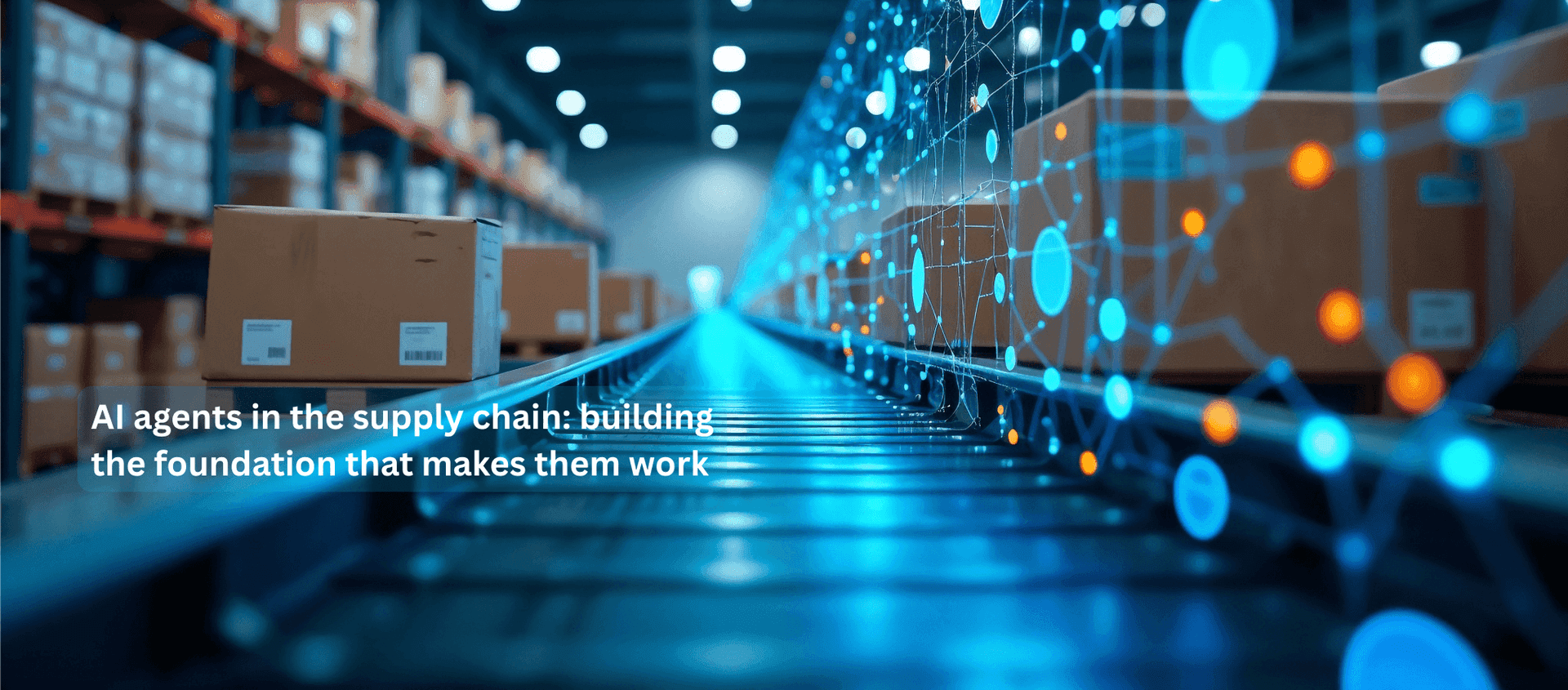
AI agents in the supply chain are software that reads live operating data, decides what to do within limits you have set, and acts on connected systems without waiting for someone to notice an alert. It might reroute a shipment, pre-empt a stockout, or rebalance stock across sites overnight. The capability is real, and it is improving fast.
The agent, though, is only the visible part of a much larger job. Whether it earns a place in your operation is settled by what sits beneath it: the data it reasons over, the systems it acts through, and the rules that hold it to account. That foundation, not the model on top, is where supply chain initiatives are won or quietly lost. This piece is about how to implement AI agents in supply chain operations so the foundation actually holds.
The foundation decides the outcome
A workshop demo runs on clean data and a tidy scenario, so the agent looks sharp. Live operations are neither clean nor tidy. Master data carries years of small contradictions, planning teams hold different definitions of the same term, and the systems that execute decisions were never designed to agree with one another. Drop a capable agent onto that and the capability is not the thing that fails. The conditions around it are.
Three things have to be true before autonomy is worth attempting: the agent must trust its data, reach the systems that act on its decisions, and operate inside rules you can defend. The rest of this article takes each in turn.
Trustworthy data comes first
Data readiness for agentic AI in supply chain is the work that rarely makes the brochure, and it usually decides everything that follows. An agent can only reason over what it can see. If demand history has gaps, if two systems disagree on a supplier's lead time, or if stock positions lag a day behind reality, the agent takes all of that as fact and acts accordingly. A minor inconsistency that a human planner would have paused over becomes an automated decision, repeated across thousands of transactions before anyone thinks to review it.
This is the part of the problem Tarento was built to handle. Our DataVolve practice moves enterprises off ageing data estates and onto modern, governed platforms, with demand forecasting and inventory intelligence among the direct beneficiaries. Migrating, reconciling and earning trust in the underlying data all happen before an agent makes a single call. It is rarely the part anyone is excited about. It is almost always the part that determines whether the rest succeeds.
Integration that lets agents act
An agent that can propose a course of action but cannot carry it out simply hands your team the same manual work with an extra opinion attached. Real value depends on AI agent supply chain integration with the ERP, the SAP landscape, transport management and warehouse systems that already run your operation. The agent has to draw on those systems as conditions shift and commit its decisions back into them, so a rerouting choice becomes a genuinely updated shipment rather than a note sitting in a separate tool.
That is architectural work, and it is where care repays the effort. It calls for clean interfaces, a precise account of where an agent may commit a change and where it may not, and a clear reading of how a single action travels through the processes connected to it. Tarento approaches this the way we approach any enterprise modernisation: architecture first, build second. We design the layer that lets an agent operate inside your existing estate, rather than asking you to rebuild the estate around the agent.
Governance and guardrails you can stand behind
Governance and guardrails for autonomous supply chain agents are what separate a controlled programme from an expensive surprise. The moment an agent can act, accuracy stops being the only question, and a harder one arrives: do you trust it enough to let it act, and can you explain afterwards what it did? In practice that means a clear answer to three things. Which decisions the agent may take on its own. Which it must pass to a person. Which it must never touch at all. Every action needs a record that accounts for itself later, and the limits have to hold when the operation is under strain, not only on a calm afternoon.
This is where Tarento's Nordic foundation does real work rather than decorative work. Trust, structure and precision are not slogans for us; they shape how we build, and they line up almost exactly with what accountable autonomy demands. An agent your planners quietly distrust will be overridden until it is useless. One whose decisions can be traced, explained and bounded earns the room to take on more. We design that accountability into the system from the outset, not as something bolted on once it is already running.
Widening the remit without losing control
A single agent handling one bounded task is a useful proof. It is not a supply chain. The move that matters is turning that proof into something that runs every day, survives a change of staff, and extends to new sites and product lines without starting over each time.
The sensible path is incremental. Begin where your data is strongest and the decision is tightly bounded, perhaps inventory replenishment for one category or carrier choice on a single lane. Let it run in live conditions and study the results honestly. Then widen the remit, connect agents across planning, sourcing and logistics so they work from shared context, and shift your people towards setting objectives and handling the genuine exceptions rather than grinding through routine calls by hand. The repeatable load moves to the agents. The judgement stays with your teams.
Where Tarento fits
We do not arrive with an agent to sell you. We are a technology partner, built where Indian engineering depth meets Nordic discipline, and we work on the parts of the problem that decide whether agentic AI earns its keep in your supply chain.
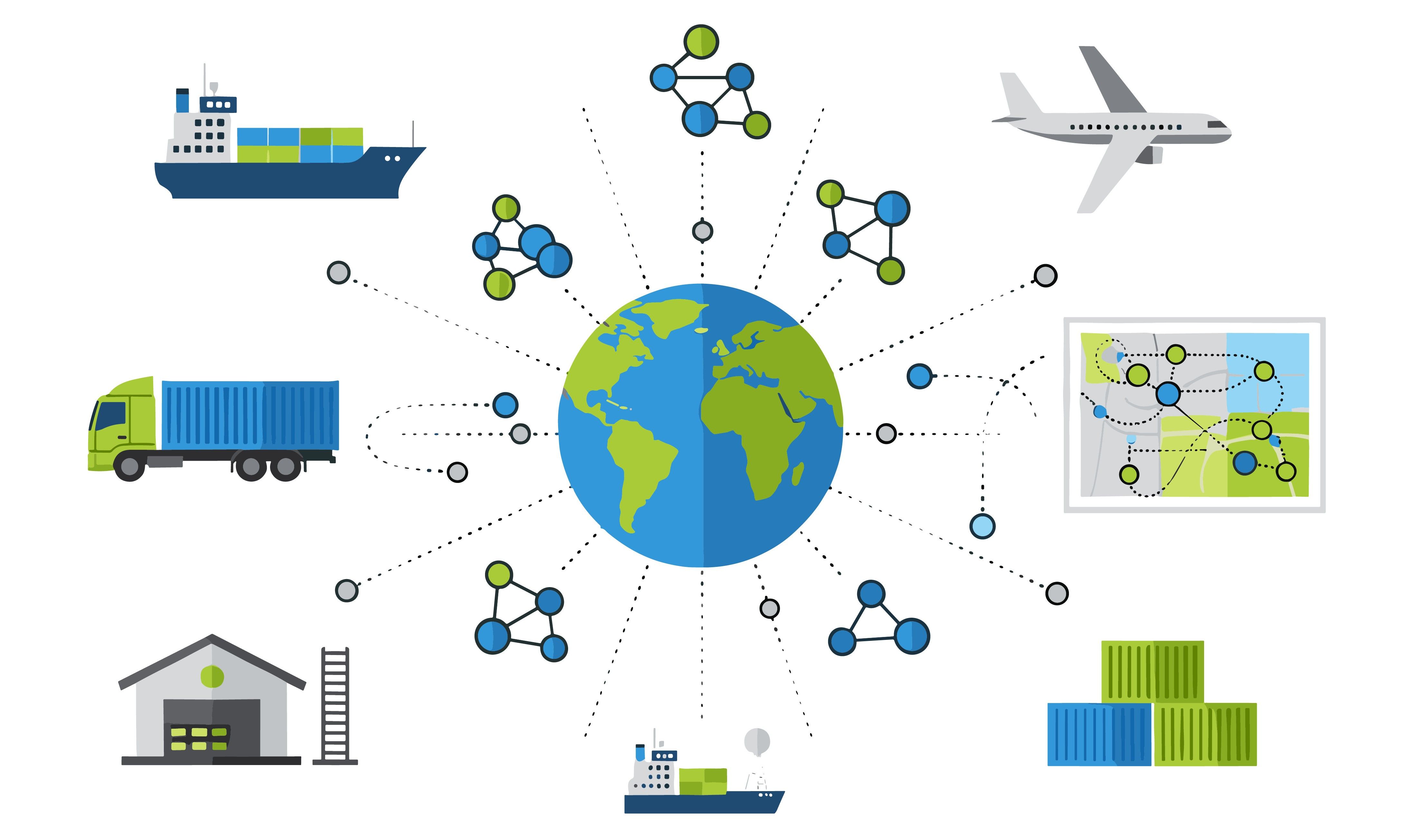
That runs the full length of the foundation. Getting your data into shape through DataVolve. Designing the integration that lets agents act inside your ERP and operational systems. Building the governance that keeps autonomous decisions safe and explainable. And guiding the steady expansion from a first contained use case to a model that runs across your network. We work in the industries we understand deeply, with senior consultants close to your operation and engineering scale behind them.
The platform vendors are right that AI agents will reshape supply chains. They tend to be quieter about the foundation that decides whether a capable agent ever becomes a working one. That foundation is the part we build, and it is where the return is settled.
If your supply chain sits somewhere between an interesting trial and a system you would trust to run on its own, the work underneath it is exactly what we help put right.
Frequently asked questions
What are AI agents in the supply chain?
They are software systems that read live operating data, decide what to do within limits an organisation sets, and act across connected systems without waiting for a person to intervene. Unlike a dashboard that only reports, an agent can reroute a shipment, trigger replenishment or flag a supplier risk, then adjust again as conditions change.
How are AI agents different from traditional supply chain automation?
Traditional automation follows fixed rules: if this happens, do that. It struggles the moment a situation appears that its rules never anticipated. An AI agent reasons over changing data, weighs the options against the goals you have set, and adapts its response. The gap shows most clearly when conditions are messy and no pre-written rule quite fits.
How do you implement AI agents in supply chain operations?
Start with the foundation rather than the agent. Reconcile your data until it can be trusted, build the integration that lets an agent act inside your ERP and operational systems, and define the rules that govern what it may decide. Prove it on one bounded use case before widening the remit. Tarento's DataVolve and integration teams focus on this very groundwork.
How do AI agents integrate with ERP and SAP systems?
An agent has to read from and write back to the systems that run your operation, so its decisions turn into real actions rather than suggestions in a separate tool. That needs clean interfaces, clear boundaries on where it may make changes, and careful handling of how one action ripples through connected processes. Tarento's enterprise integration and SAP practices build that connective layer.
How do you keep autonomous AI agents safe and governed?
Decide in advance which decisions an agent may take alone, which require a human, and which it must never make. Keep an audit record for every action so it can be explained afterwards, and set limits that hold under pressure rather than only on a quiet day. Sound governance is designed in from the start, not bolted on once the agent is already running.
Will AI agents replace supply chain planners?
No. They take on the repetitive, high-volume decisions so planners can spend their time on judgement, exceptions and strategy. The most effective arrangements pair human oversight with machine execution, widening what the agent handles as trust and evidence accumulate. Your people stay in charge of the calls that genuinely need them.
Ready to build the foundation?
Talk to the team that handles the unglamorous part well. Explore Tarento's services, from data modernisation with DataVolve to enterprise integration and SAP, and start a conversation about where your supply chain stands today.

AI Agents for Enterprises: a practical guide to adoption that holds up