Embedding AI in critical infrastructure: security risks, ethical challenges, and how to address them
AI no longer sits at the edge of critical infrastructure. It schedules energy across grids, flags patient deterioration in intensive care, routes freight through ports, and watches supply chains for the first sign of disruption. The gains are real: faster decisions, fewer manual errors, lower operating costs. So is the exposure. When an AI system helps run a grid or a hospital, a fault no longer stays local. It travels through every service that depends on it.
That changes the nature of the question. It is no longer a question of whether AI belongs in high-consequence systems, because it is already there. The question is how to embed it so it stays secure, accountable, and within the rules, even when something goes wrong. Plenty of writing names the risks.
This piece addresses them and the engineering and governance work that determines whether AI in critical infrastructure can be trusted.
Where AI already runs critical systems
The operational footprint is wide.
- Hospitals use predictive analytics to position beds, ventilators and staff before demand peaks.
- Energy providers balance grid load and forecast fluctuations without laying new physical infrastructure.
- Ports and warehouses automate throughput and reduce the conditions that cause accidents. Across logistics, AI reads early signals of disruption and reroutes around them.
Each of these moves a decision a person used to make into a model that now makes it at scale. That is the source of the value and the risk. The two arrive together.
When the AI becomes the attack surface
Traditional software does what it was written to do. An AI system adapts to the data it receives, and that adaptability opens routes an attacker can take. Two are worth naming plainly. Data poisoning feeds corrupted examples into a training set so the model learns the wrong lesson. Adversarial attacks craft inputs designed to make a model fail in a chosen, specific way. A poisoned logistics model might route deliveries into delay across a whole distribution network. A manipulated diagnostic model might return a confident, wrong result that shapes a treatment.
The exposure is structural, not occasional. These systems depend on interconnected parts: cloud platforms, APIs, sensor networks, IoT devices and, in true critical infrastructure, operational technology that was never designed to face the internet. Every connection is a possible way in. Securing them means treating the model, its data pipeline and its hosting as one protected system, with controls across the whole lifecycle rather than a wall around the outside. That work starts with the data, because a model is only as trustworthy as the information it learns from. Data integrity, lineage and validation are the first line of defence, not an afterthought, and putting that foundation in place is what Tarento's DataVolve practice exists to do.
Accountability when a machine decides
Security is one half of the problem. The other is responsibility. When an automated system produces a harmful or incorrect outcome, who answers for it?
The accountability cannot be handed to the model. A diagnostic tool trained on an unrepresentative population will perform worse for the groups it underrepresents, a bias a clinician, rather than the software, carries the duty to catch. Sound practice here is specific: representative training data, decision logic a human can interrogate rather than take on faith, and oversight that stays meaningful rather than ceremonial. The people accountable for a decision have to be able to see why the system reached it.
Public trust is a practical constraint as much as a moral one. A system seen as opaque or inconsistent meets resistance, whatever its accuracy figures say. Explainable AI, documented decision logic and clear governance are therefore not soft extras. They are what allow a high-consequence deployment to proceed at all. This is where a Nordic engineering culture earns its place, since traceability and restraint are how we build by default.
Integration into estates that cannot stop
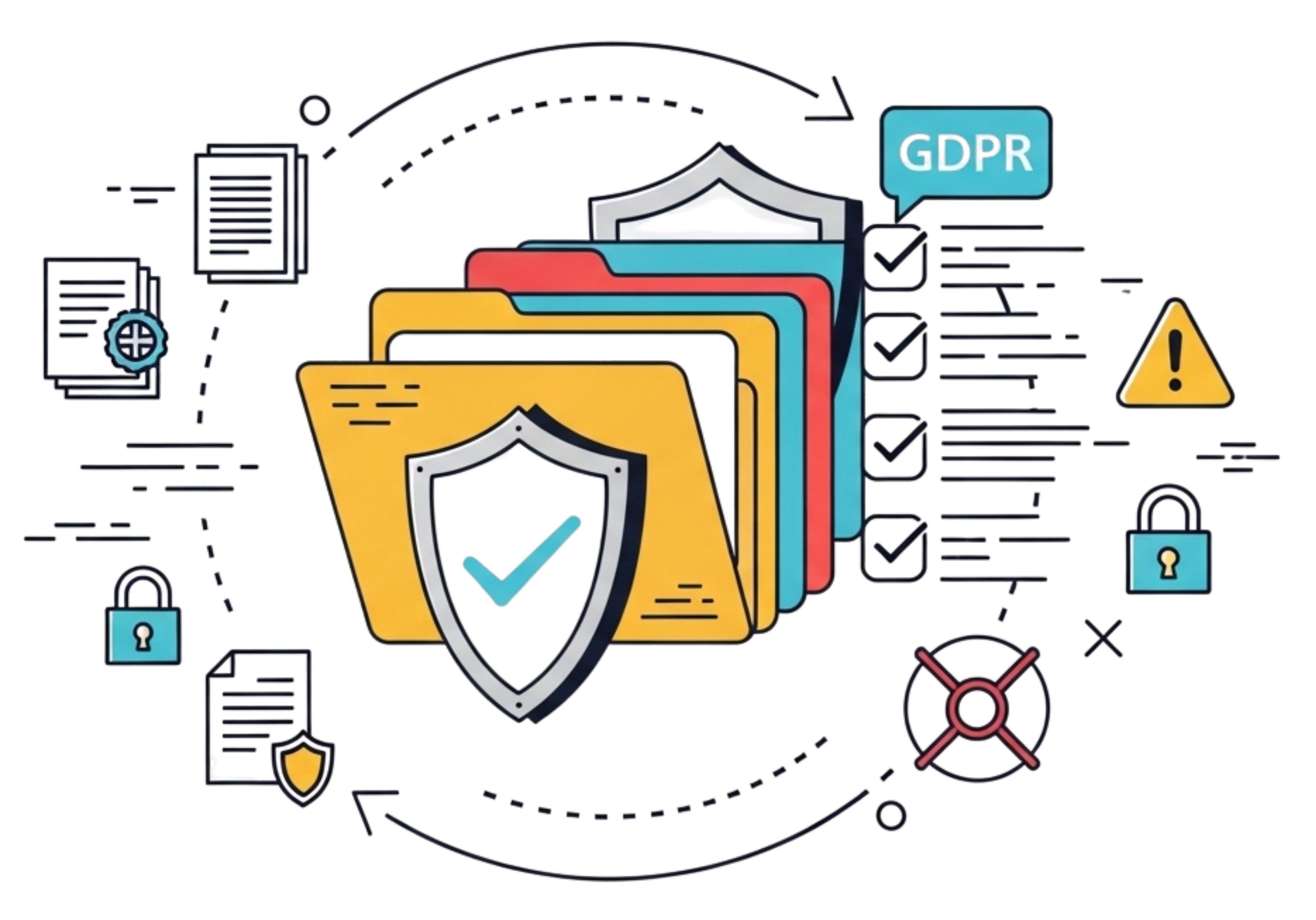
Embedding AI in a mission-critical environment is rarely a clean install. The systems already in place are old, the data is scattered, and the operation cannot pause while you connect things. A hospital deployment has to meet medical-record systems, patient-privacy rules and regulations such as GDPR and HIPAA. A logistics deployment has to reach ERP, fleet and warehouse systems and third-party services, all while orders keep flowing.
The way through is architectural. A modular design lets each component be tested, updated or replaced without taking the wider system down, and it keeps the whole thing auditable when a regulator or a security review comes asking. That same modularity is what lets you adapt quickly when a rule changes or a new threat appears. Building that connective layer well is enterprise integration work, and it rewards getting the architecture right before the build begins.
The regulatory weight you cannot set aside
For anyone operating in Europe, this has moved past guidance. The EU AI Act treats critical-infrastructure AI as high-risk, with obligations on transparency, oversight and risk management phasing in. The NIS2 Directive places cybersecurity duties and fast incident reporting on essential operators across energy, transport, health, banking and digital infrastructure, and an AI model sitting inside one of those services is part of the attack surface that has to be secured and reported on. GDPR continues to govern the personal data many of these systems touch.
Read together, these rules reward precisely the engineering described above: secure-by-design systems, auditable decisions, documented governance and a clear lifecycle from training to decommissioning. Treating compliance as an architectural property rather than a paperwork exercise is the difference between a deployment that lasts and one that has to be unpicked later.
How Tarento approaches it
At Tarento, the pattern we follow is consistent. Establish trustworthy data through DataVolve before a model is trained on it. Design a modular, auditable architecture that integrates with the systems you already run, rather than forcing a rebuild. Secure the model across its full lifecycle, from training-data validation through to monitoring that catches model drift and misuse after deployment. Keep human oversight on the decisions that carry real consequences, and make the governance explainable to the auditors and regulators who will ask.
The aim is not to slow AI down where it matters most. It is to embed it so that capability and accountability grow together, which is the only way it holds up in environments where failure is not an option.
Frequently asked questions
What are the main security risks of AI in critical infrastructure?
The most serious are data poisoning, where corrupted examples are slipped into a training set so the model learns the wrong thing, and adversarial attacks, where crafted inputs push a model into a chosen failure. On top of these sit model drift over time and the wide attack surface created by the cloud platforms, APIs, sensors and operational technology these systems connect to. Every connection is a potential way in.
What is data poisoning and how can it be prevented?
Data poisoning is the deliberate corruption of the data a model trains on, which can plant hidden bias or a backdoor that only surfaces later. Because a poisoned model can no longer be trusted, prevention starts upstream: validating data integrity, tracking its lineage, controlling who can change training sets, and monitoring outputs for anomalies after deployment. Strong data foundations are the practical defence, and that is the work Tarento's DataVolve practice handles.
What is an adversarial attack on an AI model?
An adversarial attack feeds a model inputs that look ordinary to a person but are engineered to make it misjudge them. A subtly altered image or a small change in sensor data can produce a confident, wrong output. In a critical system that might mean a misrouted delivery or a flawed diagnostic result, which is why models in high-consequence settings need adversarial testing before and during production.
Who is accountable when an AI system makes a wrong decision?
Accountability stays with people, not the model. A clinician, an operator or the deploying business carries responsibility for a consequential decision, even when AI informed it. That is why explainable AI, decision logic a human can interrogate, and meaningful oversight matter so much. If no one can see why the system acted as it did, no one can answer for the outcome.
What regulations apply to AI in critical infrastructure?
For operators in Europe, several overlap. The EU AI Act classes critical-infrastructure AI as high-risk, with duties on transparency, oversight and risk management. The NIS2 Directive sets cybersecurity and incident-reporting obligations on essential operators in sectors such as energy, transport and health. GDPR governs the personal data many of these systems process. Treating these as design requirements rather than paperwork is the sound approach.
How can enterprises deploy AI in critical infrastructure safely?
Safe deployment rests on the foundation beneath the model. Establish trustworthy data before training, design a modular and auditable architecture through sound enterprise integration, secure the model across its whole lifecycle, and keep human oversight on the decisions that carry real weight. Begin with one bounded use case, prove it in live conditions, then widen the remit. Tarento works on exactly these layers.
Ready to embed AI you can stand behind?
If you are putting AI into systems where security, ethics and uptime are not negotiable, that is the work we are built for. Explore Tarento's services, and let us talk about doing it responsibly.

Performance Engineering: 5 Design Decisions That Decide Scale