10 Enterprise Technology Trends in 2026: A Tarento Guide for CTOs and Software Architects
Enterprise technology trends in 2026 are being shaped by one clear shift: execution is replacing experimentation. CIOs and CTOs are no longer asking whether AI, cloud, data and security matter. They are asking how to scale them responsibly, govern them properly and prove measurable business value.
This guide brings Tarento’s enterprise technology perspective on the priorities CTOs & Software Architects must plan for in 2026, from AI-ready architecture and data governance to cloud optimisation, SAP modernisation, integration and security.
The pattern is clear: Enterprises are moving from isolated pilots to operating models. From model selection to orchestration. From cloud adoption to cloud economics. From technology ambition to execution discipline.
Executive summary
The 2026 enterprise technology agenda is defined by ten priorities:
- Governing agentic AI before scaling it
- Building orchestration layers around models
- Treating data trust as the real AI constraint
- Preparing security teams for AI-enabled threats
- Designing real-time analytics only where it creates value
- Extending zero trust to non-human identities
- Bringing FinOps into everyday cloud operations
- Managing platform convergence with selection discipline
- Modernising legacy infrastructure before it blocks AI
- Building sovereign, domain-specific and trustworthy AI systems
The work is no longer about chasing every emerging technology. It is about deciding which foundations need to be strengthened so AI-enabled business models can scale safely.
1. From AI copilots to governed agentic workflows
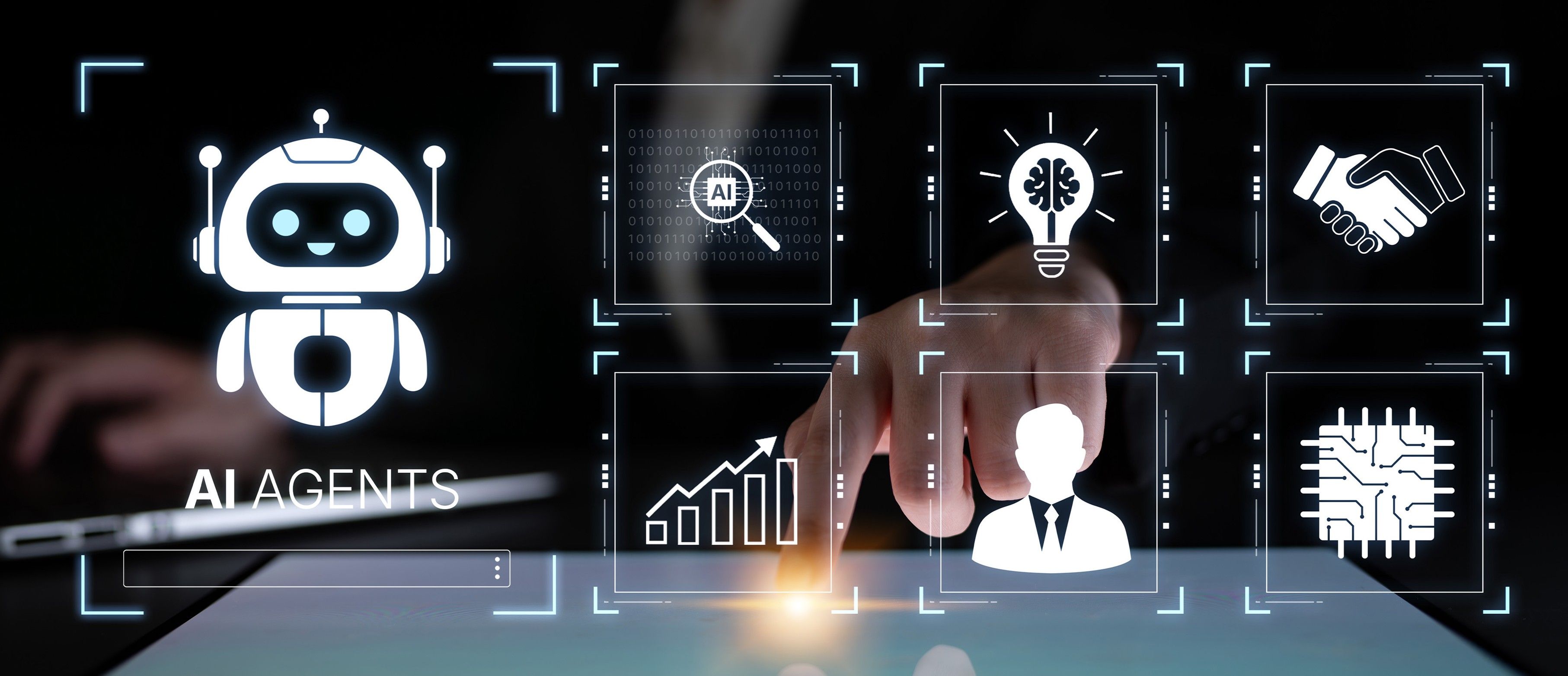
Agentic AI is moving enterprise automation beyond copilots that suggest the next step. The next stage is workflow execution: agents that call tools, coordinate across applications, retrieve information, trigger actions and request human approval at defined checkpoints.
The opportunity is real, but so is the operational risk. Once an AI agent can act across systems, it needs the same governance discipline as any other enterprise actor. Leaders need to know which agents exist, which tools they can access, what data they can read, who approved their permissions and how their decisions are audited.
The first useful agentic workflows will not be the broadest ones. They will be the most bounded ones. Procurement triage, customer support routing, IT operations, financial close and internal knowledge assistance are strong early candidates because the workflow boundaries are clearer.
Where to start:
Start with agentic workflows where approval paths, system access, audit trails and rollback options are explicit. Do not scale agents faster than your ability to govern them.
The delivery implication:
This is where Generative & Agentic AI work must connect with integration, identity, observability and process design. The agent is only useful if the enterprise systems around it are reliable.
2. Orchestration becomes more important than model choice
In 2026, the question is less “which LLM should we choose?” and more “how should we orchestrate intelligence across tools, data and workflows?”
The model still matters, but the differentiator is increasingly the system around it: retrieval pipelines, prompt governance, tool routing, cost controls, model selection, human approval, observability and agent-to-agent coordination. Many enterprise workloads will not need the largest model every time. They will need intelligent routing between smaller models, larger models, internal data sources and business applications.
Open protocol work is also changing the enterprise AI architecture conversation. Anthropic’s Model Context Protocol (MCP) moved under the Linux Foundation’s Agentic AI Foundation in December 2025, while Google’s Agent2Agent (A2A) protocol became a separate Linux Foundation-hosted project earlier in 2025. Together, they point to a practical direction: enterprise agents will need standard ways to access tools, exchange context and coordinate across systems.
Where to start:
Treat AI orchestration as an architectural layer. Define how models are selected, how tools are exposed, how agents communicate, how outputs are validated and how costs are controlled.
The delivery implication:
For enterprises with complex SAP, Microsoft, data and integration landscapes, orchestration will become a core architecture decision. The value will sit in how safely AI connects to business systems, not in the model alone.
3. Trusted data becomes the real AI constraint
AI scale is limited by data trust. If enterprise data is fragmented, poorly governed or unclear in ownership, AI systems will produce unreliable outputs no matter how strong the model is.
For CIOs and CDOs, this moves data governance from a compliance function to an execution function. Lineage, access control, data quality, metadata, provenance and ownership now determine whether generative AI and agentic AI can move from pilot to production.
Retrieval-augmented generation adds another layer. If enterprise AI is expected to answer from internal sources, those sources must be accurate, permission-aware and traceable. Without that foundation, AI systems can confidently produce answers that are incomplete, outdated or unauthorised.
Where to start:
Before scaling AI use cases, define data product ownership, lineage standards, access policies and quality gates. AI governance starts with data governance.
The delivery implication:
Data engineering, data platform modernisation and governance are now AI-enablement work. Enterprises that treat them as separate initiatives will struggle to scale trustworthy AI.
4. Security teams prepare for AI-enabled threats
Security in 2026 is increasingly shaped by AI on both sides of the equation. Attackers are using AI to scale phishing, deepfakes, social engineering, synthetic identities and automated reconnaissance. Defenders are using AI for detection, response, triage and anomaly analysis.
The risk is not only technical. Deepfake-driven fraud, executive impersonation, contract manipulation and AI-generated social engineering now create board-level exposure. Security teams need layered defences, stronger verification processes and playbooks that assume AI-generated deception will become more convincing.
AI inside the SOC can improve speed, but it also needs guardrails. Automated response without context can create operational disruption. Detection models must be tested, monitored and tuned continuously.
Where to start:
Update security playbooks for AI-enabled fraud, deepfakes and autonomous attack patterns. Pair AI-augmented detection with human review for high-impact response decisions.
The delivery implication:
Security cannot be added after AI systems scale. It must be designed into the operating model, especially where agents, APIs and enterprise workflows intersect.
5. Real-time analytics becomes selective, not universal
Real-time analytics is becoming more important, but not every decision needs sub-second freshness. The mature enterprise question is not “how do we make everything real time?” It is “which decisions genuinely need real-time data, and which can run on hourly or batch updates?”
Streaming architectures are now well established. Apache Kafka and similar platforms handle ingestion. Apache Flink and Spark Structured Streaming support real-time processing. Lakehouse table formats such as Delta Lake, Apache Iceberg and Apache Hudi help bridge batch and streaming workloads.
The challenge is economic and architectural discipline. Real-time systems increase complexity, cost and operational overhead. They make sense when the decision value justifies the infrastructure.
Where to start:
Classify decisions by freshness requirement. Build real-time pipelines for fraud detection, operational alerts, dynamic pricing or customer experience use cases where latency matters. Avoid streaming infrastructure where batch is good enough.
The delivery implication:
High-performance data ingestion and pipeline management should be designed around business decisions, not technology enthusiasm. The right architecture balances freshness, reliability, cost and maintainability.
6. Zero trust expands to AI agents and non-human identities
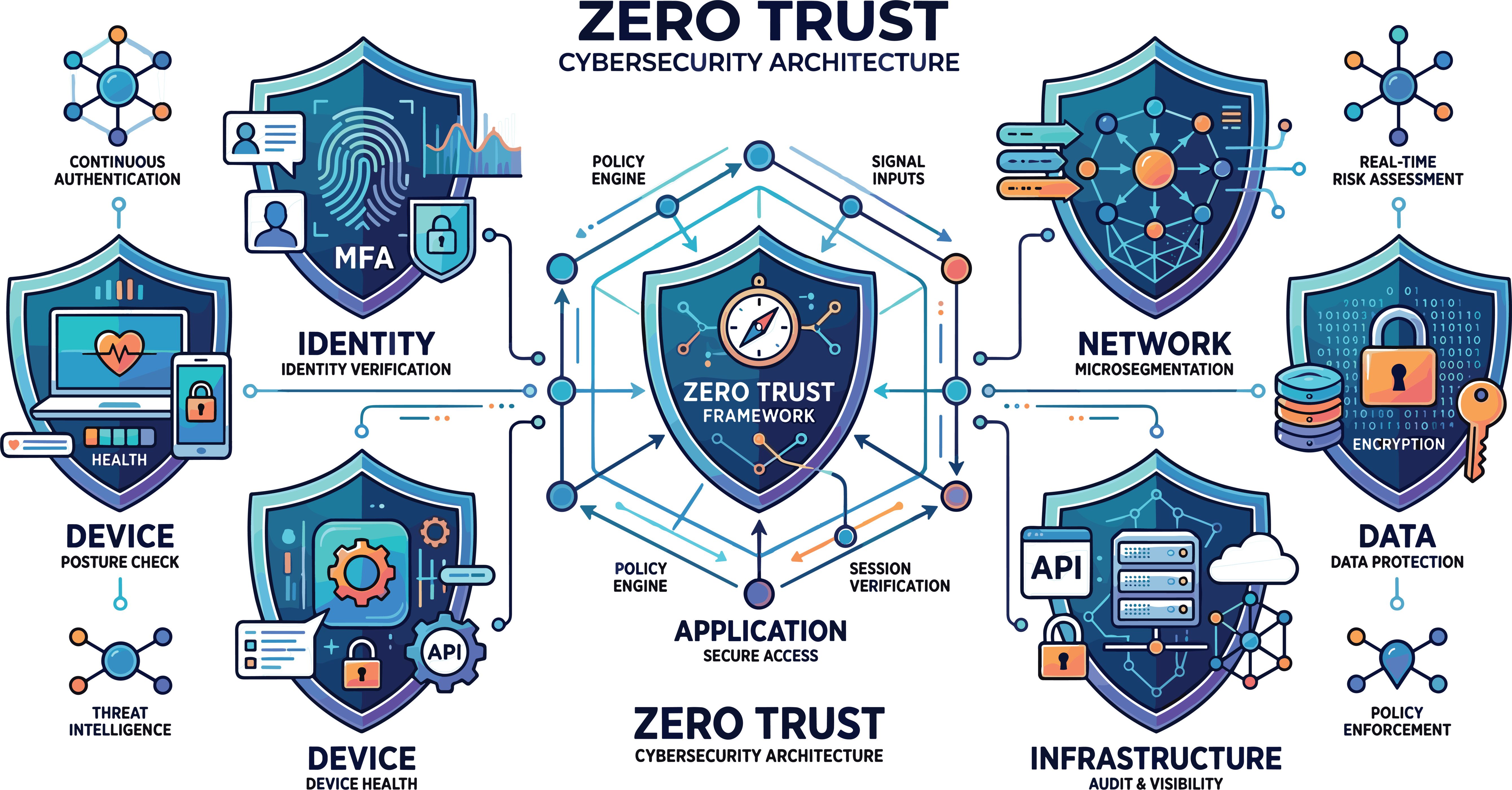
Identity remains the new perimeter, but the perimeter is no longer limited to human users. AI agents, automation scripts, service accounts, bots and integration components are becoming high-volume actors inside enterprise systems.
Every non-human identity needs clear ownership, scoped permissions, auditability and revocation. If an AI agent can retrieve data, trigger workflows or update records, enterprises must know what it did, when it did it, which authority it used and how to stop it.
This is especially important in regulated sectors. Audit trails cannot stop at the human user who launched a workflow. They must capture the autonomous or semi-autonomous actions that happened after that point.
Where to start:
Extend IAM, privileged access, entitlement reviews and audit controls to AI agents and automation identities. Every agent should have an owner, a permission boundary and a kill switch.
The delivery implication:
As agentic AI connects into enterprise applications, identity architecture becomes part of AI architecture. This is where integration, security and platform engineering must work together.
7. Cloud strategy shifts from adoption to cost accountability
Cloud is no longer an adoption question for most enterprises. It is an operating environment. The real 2026 conversation is about optimisation, accountability and workload economics.
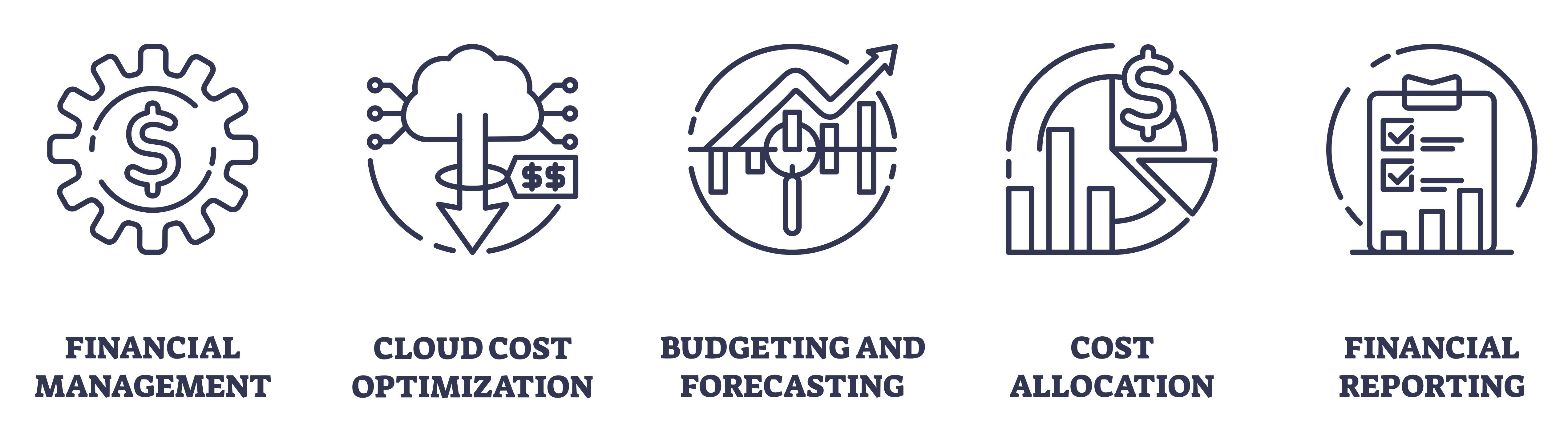
FinOps is becoming a standing operating discipline. Cloud spend must be visible to product teams, not hidden in central infrastructure budgets. Teams need to understand which workloads drive cost, which resources are underused, which environments can scale down and which architectural choices create recurring spend.
Hybrid and multi-cloud strategies are also becoming more pragmatic. The question is not whether an enterprise can run across providers. The question is whether workload portability, sovereignty needs, vendor risk or cost justify the added complexity.
Where to start:
Bring FinOps into product team planning. Tie cloud cost to ownership, usage, architecture and business value instead of treating it as a monthly infrastructure surprise.
The delivery implication:
Cloud & DevOps work in 2026 must combine infrastructure-as-code, observability, workload portability and cost governance. Optimisation should be designed into the platform, not handled as a clean-up exercise.
8. Platform convergence needs selection discipline
AI, data, security and cloud platforms are converging. Vendors are building more integrated stacks because enterprises want fewer moving parts, fewer integration points and more consistent governance.
This convergence is useful, but it also creates a new risk: overcommitting to a platform because it offers breadth, even when a specific capability is not best suited to the workload. A converged platform can simplify operations, but it can also create lock-in, migration complexity and architectural compromise.
The right approach is not platform maximalism. It is selection discipline. Enterprises need to map workloads to platform strengths, decide where standardisation creates value and keep room for specialist components where they are justified.
Where to start:
Evaluate platforms by workload fit, governance model, integration depth, cost profile and exit flexibility. Do not confuse consolidation with simplification.
The delivery implication:
For Tarento’s clients, platform decisions often span SAP, Microsoft, cloud, data and integration ecosystems. The architecture must support convergence where it helps, and modularity where the business needs flexibility.
9. Legacy modernisation becomes an AI-readiness issue
Technical debt is no longer only an engineering concern. It is becoming a business constraint because AI workloads expose weaknesses in legacy systems, fragmented data, brittle integrations and ageing infrastructure.
The familiar modernisation candidates are still present: legacy ERP estates, monolithic applications, ageing middleware, slow data warehouses and manual integration patterns. What changes in 2026 is the urgency. Enterprises cannot run AI-enabled workflows on foundations that cannot expose data, support APIs, scale reliably or provide observability.
SAP PI/PO is one example. With mainstream maintenance for SAP Process Integration and Process Orchestration 7.5 running until the end of 2027, many enterprises need to plan integration modernisation before it becomes a risk to business continuity.
Where to start:
Prioritise modernisation based on AI-readiness and operational risk. Start with the systems that block data access, workflow automation, integration resilience or cloud scalability.
The delivery implication:
This is where Tarento’s work across SAP migration, Enterprise Integration, Infor M3 implementation, application modernisation and data platforms becomes directly connected to the AI agenda. Modernisation is no longer separate from innovation.
10. AI sovereignty and domain-specific models move into strategy
AI sovereignty is becoming a strategic concern for enterprises that need control over data, infrastructure, model behaviour and regulatory exposure. This is especially relevant for Nordic and European organisations operating under stricter data protection, security and AI governance expectations.
The EU AI Act entered into force in 2024 and applies in phases. Prohibited AI practices and AI literacy obligations began in 2025, broader applicability begins in 2026, and some high-risk system obligations extend into later phases. For enterprises, this reinforces the need for AI systems that can be audited, governed and explained.
At the same time, the market is moving towards smaller, domain-specific models for many enterprise use cases. These models can be easier to control, cheaper to run and better aligned with specialised business language than general-purpose models.
Where to start:
Decide which AI capabilities must remain close to enterprise data, which can use external platforms and which require domain-specific tuning, auditability or sovereign deployment options.
The delivery implication:
Tarento’s Language AI work, including Anuvaad and the ULCA platform behind BHASHINI, reflects this direction. Domain-specific models, grounded in trusted data and governed at the platform layer, are often more useful than generic AI applied without context.
What this adds up to for 2026
The 2026 enterprise technology agenda is not about adopting more tools. It is about building the foundations that let enterprises use technology with confidence.
- Agentic AI needs orchestration, identity and auditability.
- Generative AI needs trusted data and governance.
- Cloud needs cost accountability.
- Security needs AI-aware operating models.
- Modernisation needs to be prioritised around business resilience and AI-readiness.
For Tarento’s clients, the work is concrete:
- Modernise the integration backbone before scaling agents.
- Establish data lineage and governance before deploying domain-specific models.
- Bring FinOps into product team budgets.
- Extend identity controls to AI agents and automation identities.
- Choose orchestration discipline over vendor maximalism.
- Treat platform engineering as the foundation for AI-enabled growth.
Ready to plan your 2026 technology priorities?
If your organisation is evaluating agentic AI, cloud optimisation, SAP and integration modernisation, data governance or AI-ready platforms, Tarento can help you identify where to start and how to scale with confidence.
Get in touch to discuss where your enterprise technology roadmap should focus in 2026.

Cloud Migration Strategy 2026: How Enterprises Are Rebalancing Cost, Risk and Repatriation