Pragmatic Engineering & Culture Practices That Separate Mature Teams from Fragile Ones
Elite engineering teams deploy on demand, with a lead time under a day and a change failure rate near 5%. Low performers can take one to six months to ship a single change, according to the DORA State of DevOps research. Separately, the average cost of enterprise downtime now runs to roughly $15,000 a minute, and Global 2000 companies lose a combined $600 billion a year to unplanned outages, according to Splunk and Cisco's 2026 research. The gap between those two worlds is rarely a talent gap. It is a set of engineering habits that either exist or don't.
Most of what separates a mature engineering team from a fragile one has nothing to do with framework choice, cloud provider, or headcount. It shows up in smaller decisions: whether a release can be undone in seconds or only by redeploying, whether an outage gets priced in dollars or waved off as "a blip," whether reliability targets are shared language or tribal assumption, and whether a variable name tells the next engineer what it means or makes them guess.
None of these are new ideas. What is rare is treating them as a connected discipline rather than four unrelated best practices scattered across different teams. This guide sets out what pragmatic engineering looks like on each one, and what it typically costs when it's missing.
4 Pragmatic Engineering & Culture Habits That Define Mature Teams
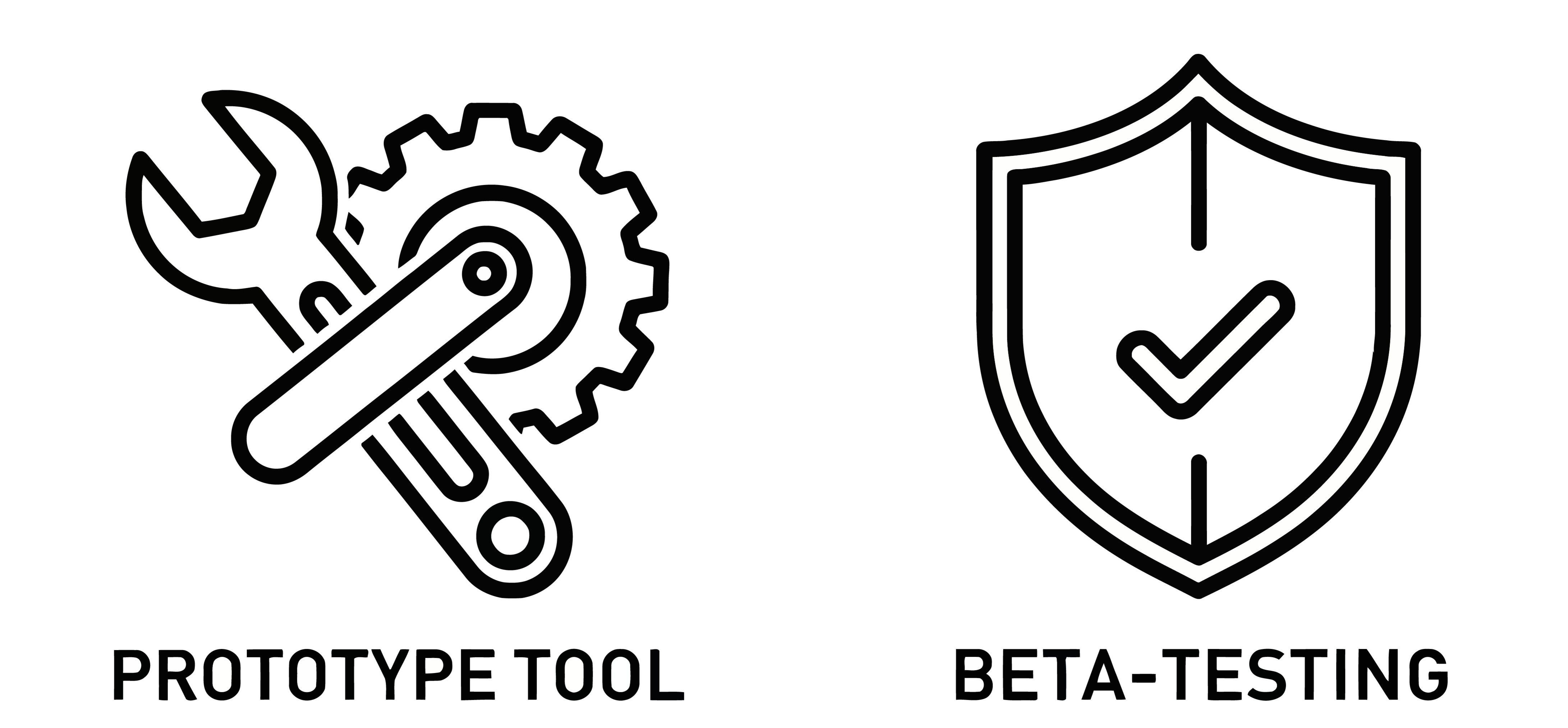
- Feature Flags and Progressive Delivery decouple deploying code from releasing it, so a bad change is a configuration toggle away from being contained, not an hour-long redeploy across services.
- The Economics of Downtime turns availability from an ops metric into a cost model, so reliability investment gets prioritised the same way any other spend does.
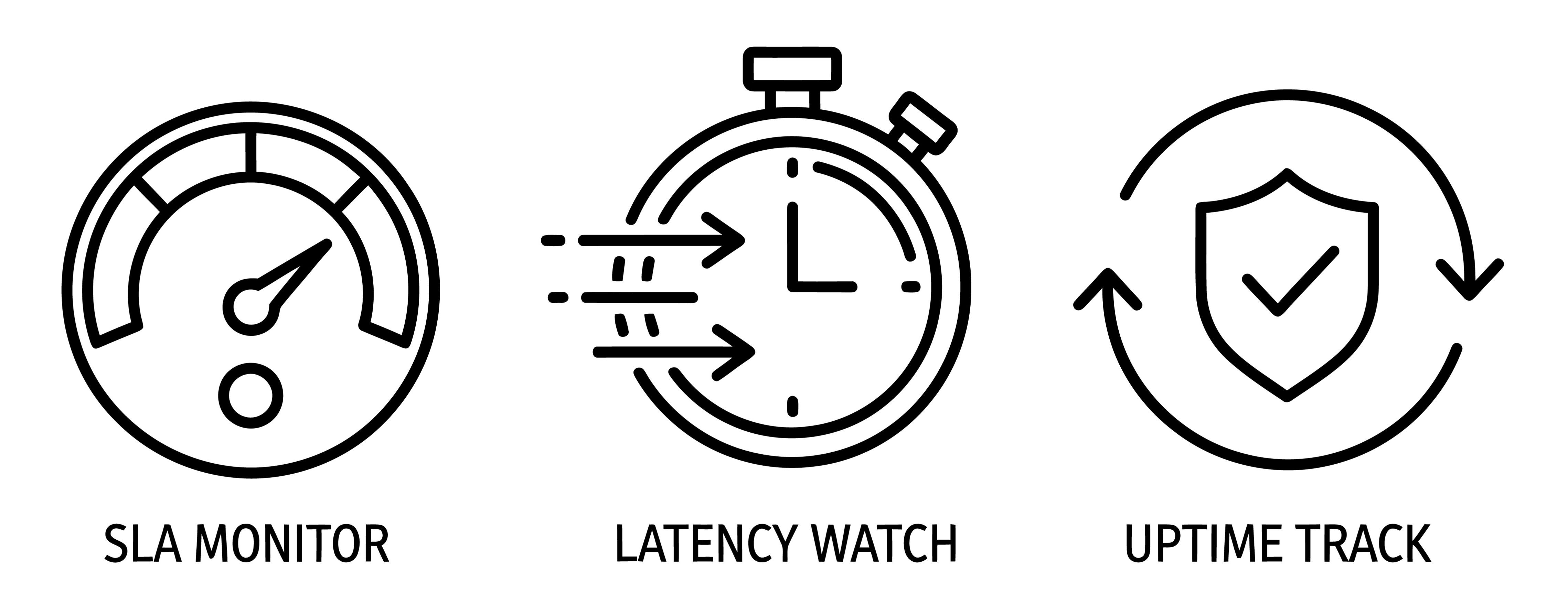
- SLA, SLO, and SLI give engineering, product, and business a shared language for "how reliable is reliable enough," instead of three teams quietly assuming different answers.
- The Craft of Naming treats variables, functions, and services as the smallest unit of system design, because software is read far more often than it is written.
1. Feature Flags and Progressive Delivery
Shipping software has always been risky. A single deployment can introduce bugs, break flows, or slow down critical paths, and the blast radius is often the entire user base. Yet teams still equate "deploying code" with "releasing features," as though the two were a single decision rather than two. Feature Flags and Progressive Delivery break that dangerous coupling. They let teams deploy code safely, test in production responsibly, and release features gradually instead of all at once. For engineers, this isn't a tooling discussion, it's a mindset shift in how releases, rollbacks, and experimentation get thought about at scale.
Why This Matters for the Business
As systems grow, so does the cost of failure. A bad release in a monolith might inconvenience users; in a distributed system, it can cascade across services. Feature flags reduce this risk by giving teams control after deployment. Progressive delivery adds another layer by enabling gradual exposure by percentage, geography, cohort, or capability, turning releases from big-bang events into controlled experiments. This matters most for organisations that ship frequently, operate globally, or serve multiple business lines. Without it, teams either move slowly out of fear, or move fast and burn trust.
Key question: If your next release turns out to be wrong in production, is disabling it a config change, or a redeploy across three services?
What Feature Flags and Progressive Delivery Actually Are
A feature flag is a conditional switch in code that determines whether a feature is active at runtime, controlled dynamically via config, a service, or metadata, rather than by branching code per environment or version. This lets teams deploy code that stays dormant, enable it later, or turn it off instantly without redeploying.
Progressive delivery builds on that by controlling who sees a feature and when. Instead of enabling a feature for everyone at once, teams roll it out incrementally: 1%, 5%, internal users, a specific region, or a business cohort, with metrics and logs monitored at each step to validate assumptions before widening exposure.
From first principles, these practices optimise for decoupling deployment from release, reducing blast radius, faster feedback from real users, and operational reversibility. Discipline matters here: flags must be named clearly, owned explicitly, monitored, and removed once obsolete, since long-lived flags become technical debt in their own right. Progressive delivery also depends on strong observability, metrics, alerts, and dashboards, to decide whether to proceed, pause, or roll back.
When Teams Didn't Follow This
A payments team shipped new pricing logic behind a full rollout rather than a staged one. It worked in staging, but production traffic exposed a latency spike in downstream services. With no feature flag in place, rollback meant redeploying across multiple services, taking over an hour. Checkout failures increased, support tickets spiked, and business teams lost confidence during that window. A simple kill switch would have limited the impact to a small cohort and enabled instant disablement. Instead, the absence of progressive delivery turned a minor logic issue into a customer-facing incident.
Feature flags and progressive delivery aren't luxuries; they're safety mechanisms for modern software delivery. Used well, they turn production into a controlled, observable environment instead of a gamble. This is the discipline Tarento builds into every release pipeline through Product & Platform Engineering and Quality Assurance & Automation: designing rollback into the release from day one, rather than discovering its absence during an incident.
2. The Economics of Downtime
Downtime is rarely "just an outage." It's a bill, often a surprisingly large one, that shows up across revenue, reputation, and team velocity, and the worst part is that the invoice is usually hidden. A 20-minute incident can quietly trigger refunds, missed conversions, SLA penalties, support spikes, leadership escalations, and a week of engineering context-switching. For tech leads and architects, thinking about downtime purely as an availability metric misses the point. Downtime is an economic event, and once it's framed that way, reliability stops being a nice-to-have and becomes a product and business strategy.
Why This Matters for the Business
Reliability decisions are resource-allocation decisions. Every "we'll fix it later" choice is a bet that the cost of prevention is higher than the cost of failure, and teams lose that bet when they underestimate the blast radius: downstream systems, customers in different time zones, batch jobs failing, retries amplifying load, and human time burned in incident calls. Downtime cost is also nonlinear, small failures can cascade into major ones. Leaders care about money and risk, and translating reliability work into economics is what lets a team prioritise correctly, justify investment in autoscaling, redundancy, and observability, and avoid burning quarters of roadmap time on preventable fire drills.
Key question: If your checkout service went down for 20 minutes tomorrow, could you put a number on what it actually cost, beyond the 20 minutes on the status page?
What the Economics of Downtime Actually Is
The economics of downtime is the discipline of quantifying the total cost of unavailability or degraded service, so engineering trade-offs become measurable rather than felt. It includes direct revenue loss (transactions not completed, churn from failed payments, abandoned carts, even internal platforms "losing" value through missed SLAs to dependent teams), contractual and SLA penalties (refunds, credits, enterprise escalations, renewal risk), operational cost (on-call time, incident management, support tickets, manual reconciliation, overtime), opportunity cost (roadmap delays from context-switching and risk-averse "incident-driven development"), and reputation cost, where trust decays in a way that doesn't fully reset even after users return.
A practical way to model it: Downtime Cost = (Lost Business Value per minute) + (People Cost per minute) + (Penalty Risk per minute) + (Long-tail impact). Once numbers, even rough ranges, are attached to each term, a team can decide whether to pay "insurance" upfront through redundancy, rate limiting, backpressure, and graceful degradation, or pay "interest" later through repeated incidents.
When Teams Didn't Follow This
A team ran a checkout service with a single primary database and no read replicas. During a marketing spike, DB CPU saturated, latency climbed, clients retried aggressively, and the retry storm turned partial slowness into full downtime. The team restored service in 25 minutes, but the real damage lasted days: thousands of failed orders needed reconciliation, support volume tripled, partner SLAs triggered credits, and engineers paused feature work to add indexes and patch retries. The "quick fix" became a two-week reliability sprint. The outage wasn't expensive because it was 25 minutes, it was expensive because it created secondary work and lost trust.
Downtime isn't a metric, it's a cost centre. Teams that treat uptime as economics build calmer on-call rotations, faster delivery cycles, and systems that scale without drama. This is the thinking behind Tarento's Performance Engineering and AI-Driven Operations practices: pricing reliability before an incident forces the conversation, not after.
3. How to Think About SLA, SLO, and SLI
As systems grow, reliability stops being a nice-to-have and becomes a design decision, and that's where SLA, SLO, and SLI come in. The three terms are used together constantly, but many teams treat them as jargon rather than tools for better engineering. The real value isn't in memorising definitions, it's in learning how to think with them. For tech leads and aspiring architects, this matters because reliability is no longer just an ops concern, it shapes architecture, prioritisation, customer trust, and even what teams decide not to build.
Why This Matters for the Business
Without a clear reliability model, teams run on assumptions. One team thinks "99.9% uptime" is enough, another optimises for latency, a third focuses only on feature delivery, and the result is confusion, misaligned priorities, and painful incidents. SLA, SLO, and SLI create a shared language between engineering, product, and business, forcing practical questions: what are we promising, how will we measure it, and how good is good enough. That clarity helps teams balance speed and stability, and prevents overengineering on one side and careless delivery on the other.
Key question: If your payment API stayed technically "up" during your last traffic spike but customers still saw failed checkouts, which of the three terms would have caught that before customers did?
What SLA, SLO, and SLI Actually Are
The easiest way to understand them is bottom-up. An SLI, or Service Level Indicator, is the actual metric measured: request success rate, API latency, checkout completion rate, or time to process an event. It answers what signal tells us whether the system is healthy for users. An SLO, or Service Level Objective, is the target set for that indicator, for example 99.95% of payment API requests succeeding in a 30-day window, or 95% of search requests responding within 300 milliseconds. It answers what level of reliability the team is aiming for internally. An SLA, or Service Level Agreement, is the formal promise made to a customer or business stakeholder, usually with consequences if missed, such as guaranteeing 99.9% monthly availability with service credits attached. It answers what the organisation is contractually committing to.
The right way to hold these together: SLI is what you measure, SLO is what you target, SLA is what you promise. A strong engineering team starts with meaningful SLIs, defines realistic SLOs, and only then aligns SLAs, not the other way round. A poor SLI makes the SLO meaningless, an unrealistic SLO burns out the team, and an aggressive SLA without engineering readiness turns incidents into business problems.
When Teams Didn't Follow This
An e-commerce team launched a payment orchestration service and monitored CPU, memory, and pod restarts, but never defined a user-facing SLI such as payment success rate or transaction latency. During a festive sale, the service stayed technically "up," but latency spiked and downstream retries piled up. Customers saw duplicate payments and failed checkouts. Engineering said the system was available; business said revenue was lost. Both were technically right, and that was the problem. Had the team defined an SLI around successful payment completion, an SLO around latency and success rate, and an SLA aligned to business expectations, they would have caught the real risk earlier and designed for it.
SLA, SLO, and SLI aren't just reliability terms, they're thinking tools for designing systems that are measurable, trustworthy, and aligned with business outcomes. This is the discipline Tarento embeds through Performance Engineering and Quality Assurance & Automation: defining what "reliable enough" means before it becomes a dispute between engineering and the business.
4. The Craft of Naming: Variables, Functions, Services
A system isn't understood only through architecture diagrams, API contracts, or design documents. It's understood line by line, name by name. A variable name tells us what data means, a function name tells us what action is happening, and a service name tells us what responsibility exists in the system. Good naming isn't cosmetic, it's one of the simplest ways to make software easier to read, change, review, debug, and operate. Naming is a design skill, not just a coding habit.
Why This Matters for the Business
Most systems are read far more often than they're written. Every unclear name increases the mental load on the next engineer, and when names are vague, people start guessing, and when people guess, bugs enter quietly. Poor naming also slows team communication: if one team calls something an "order," another calls it a "cart," and a third calls it a "transaction," discussions become slow and error-prone. Clear naming creates a shared language, shared language creates faster decisions, and in large systems, naming becomes a low-cost way to reduce complexity that would otherwise compound unnoticed.
Key question: If a new engineer opened your codebase tomorrow with no onboarding, how many function names would they have to open the function body to understand?
What Good Naming Actually Looks Like
Good naming starts with intent: a name should explain what something represents, not how it's technically stored. For variables, prefer names that reveal meaning, daysSinceLastPayment over count, eligibleUsers over usersList, and avoid generic names like data, info, temp, or obj unless the scope is genuinely tiny. For functions, name the action clearly; a function should usually read like a command or query, such as calculateRefundAmount, fetchActiveSubscriptions, or validatePaymentStatus. Be wary of names like process, handle, or manage, they often hide too much, and if a function name needs "and," it may be doing more than one thing. For services, name the business capability rather than the implementation detail: PaymentReconciliationService is clearer than PaymentHelper, and OrderFulfilmentService is better than OrderManager if fulfilment is the actual responsibility, since service names should help teams understand ownership boundaries.
Good names also stay consistent. Avoid mixing customer, user, member, and accountHolder unless they genuinely mean different things, and build a small domain glossary for important concepts, then use it consistently across code, APIs, events, dashboards, and documentation.
When Teams Didn't Follow This
In one commerce system, teams used orderId to mean different things across services. In the checkout service, it meant the temporary order created before payment; in the payment service, it meant the confirmed paid order; in the fulfilment service, it meant the shipment-ready order. During a production issue, logs showed the same field name across services, but it referred to different lifecycle stages. Debugging took hours longer than it should have, and a few orders were wrongly marked as failed. The root cause wasn't a complex algorithm, it was a broken shared language.
Naming is architecture at the smallest level. A good name reduces explanation; a bad name creates hidden debt. This is the standard Tarento applies through Application Development and Product & Platform Engineering: a shared domain glossary enforced from the first commit, not reconstructed during an incident.
How These Four Practices Compound
None of these four habits live in isolation. Feature flags and progressive delivery decide how safely a change reaches users, which is what makes frequent releases survivable rather than terrifying. The economics of downtime gives that safety a price tag, so investment in rollback, redundancy, and observability gets justified in the same language as any other spend. SLA, SLO, and SLI turn "reliable enough" from an assumption into a target that engineering, product, and business can actually agree on, and one that a downtime cost model can be measured against. And naming is the substrate underneath all three, because a flag nobody can identify, a metric nobody can trace to a clear variable, or a service whose name doesn't match its responsibility slows down every one of the other three practices at the exact moment speed matters most.
Treated as separate best practices, each is a habit that one team has picked up. Treated as a connected discipline reviewed at the engineering leadership level, they're what separates teams that ship confidently under pressure from teams that ship carefully because they're afraid to do otherwise.

Frequently Asked Questions About Pragmatic Engineering & Culture
1. Do feature flags replace the need for staging environments? No. They solve different problems. Staging validates a change before it reaches production; feature flags control exposure once it's there. Mature teams use both, staging to catch what testing can find, flags to contain what it can't.
2. How detailed does a downtime cost model need to be to be useful? It doesn't need to be precise, it needs to be directionally honest. Rough ranges for lost business value, people cost, and penalty risk per minute are usually enough to compare "fix this now" against "fix this later" credibly, and the model can be refined as real incidents provide better data.
3. Should every service have its own SLA? No. SLAs are external, contractual promises and should exist only where a real commitment is being made to a customer or business stakeholder. Internal services are better served by SLOs, which set an internal bar without the legal and reputational weight of a formal agreement.
4. Is renaming an existing codebase worth the effort? Selectively, yes. Wholesale renaming projects rarely get finished and carry real regression risk. The higher-value move is usually building a small domain glossary, applying it consistently to new code, and renaming the specific fields or services that have caused the most confusion or the most debugging time.
5. Where should a team start if it's doing none of these four practices today? Start with naming and SLIs, both are cheap, low-risk, and create the shared language everything else depends on. Feature flags and a downtime cost model follow naturally once a team can agree on what "healthy" means and can talk about the same concepts consistently.
Ready to build engineering habits that hold under pressure?
Whether it's a release process with no safe rollback, downtime nobody has ever priced, reliability targets that mean three different things to three different teams, or a codebase where every name needs explaining: these are exactly the habits Tarento's engineering practices are built to instil, from the first sprint rather than after the first incident.

What Happens When Your SAP Integration Suite Tenant Goes Down And Who Actually Restarts It?