Why Enterprises Must Exit Legacy Middleware In 2026
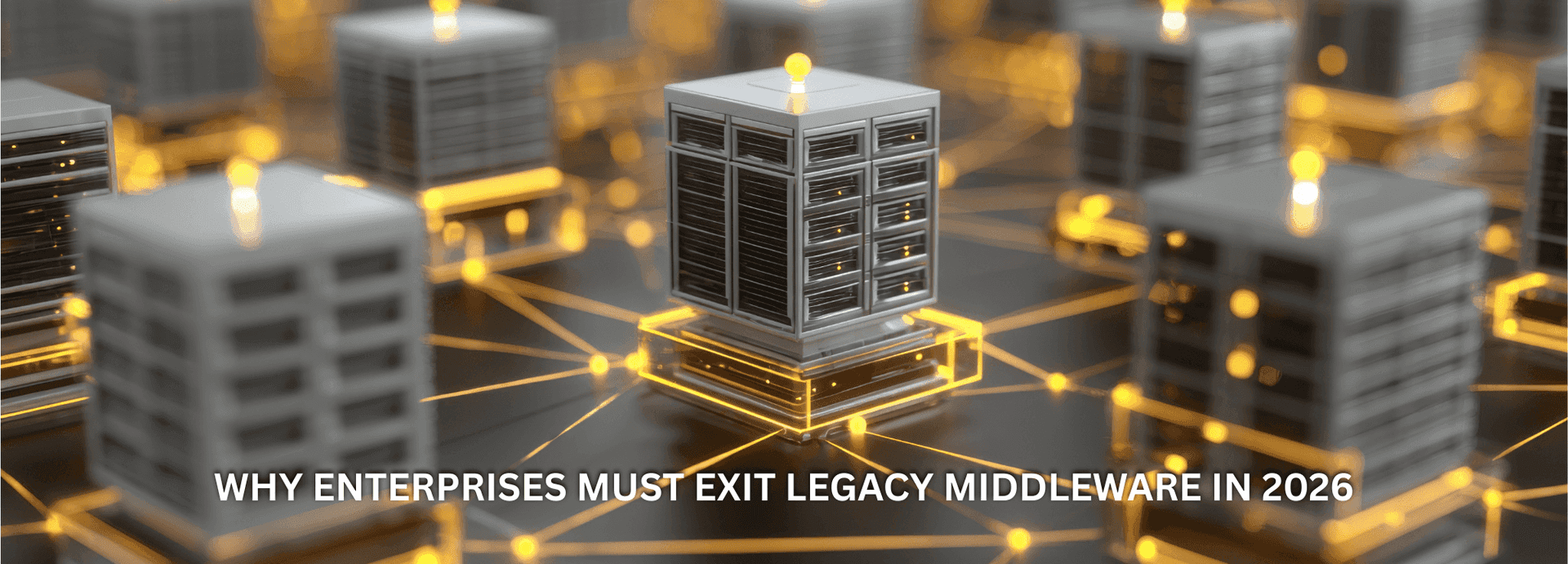
Many enterprises still rely on SAP PI/PO, Microsoft BizTalk Server, or webMethods as the integration backbone connecting ERP, CRM, supply chain, and business-critical systems. These platforms were built for a different era, and for years, they served that role well.
That era has now passed. The gap between what legacy middleware was designed to do and what modern enterprises now require has become too wide to ignore.
The Hidden Cost of Legacy Middleware
Legacy middleware rarely fails at all at once. It fails gradually: in the missed API call that needs manual intervention at 2 a.m., in the rising cost of niche specialists, and in security or compliance reviews that take longer because the integration layer lacks native visibility and observability.
SAP PI/PO sits at a clear inflection point. SAP has positioned SAP Integration Suite as the strategic successor, while PI/PO continues to carry out the cost and complexity of an on-premises architecture built around older deployment and operational models. For many organizations, that means rising maintenance effort, slower delivery, and a growing mismatch between business expectations and platform capability.
BizTalk tells a similar story. Although Microsoft continues to support BizTalk on a finite lifecycle, the long-term direction is clearly toward Azure Integration Services and Logic Apps. BizTalk remains closely tied to Windows Server and SQL Server-era operating patterns, with limited native support for serverless execution, event-driven integration, and modern observability. Support is not ending overnight, but the platform’s innovation horizon is clearly narrowing.
webMethods, now part of IBM following IBM’s acquisition of webMethods and StreamSets from Software AG, presents a similar challenge for many enterprises: expensive specialist skills, operational overhead, and growing pressure to support cloud-first, API-led, and hybrid integration models.
Why Legacy Middleware Migration Can No Longer Wait
Enterprises have always had reasons to wait. Migration is disruptive. The integration layer touches everything. Business continuity matters. For years, those arguments were enough to delay action.
That calculus has changed.
Vendor timelines are now concrete. SAP has made SAP Integration Suite the transition path for SAP Process Orchestration, while Microsoft has made clear that BizTalk Server 2020 will be the final BizTalk release. These platforms may remain operational for years, but they no longer represent the direction of enterprise integration strategy.
AI readiness depends on modern integration. Enterprise AI initiatives rely on structured, low-latency, and well-governed data flows across systems. Legacy middleware built around batch-heavy and file-based patterns is not the right backbone for that future.
The talent market has moved on. Skilled PI/PO and BizTalk resources are harder to find, more expensive to retain, and increasingly replaced by engineers trained on SAP Integration Suite, Azure Logic Apps, and API-first architectures.
The Two Modern Destinations That Matter Most
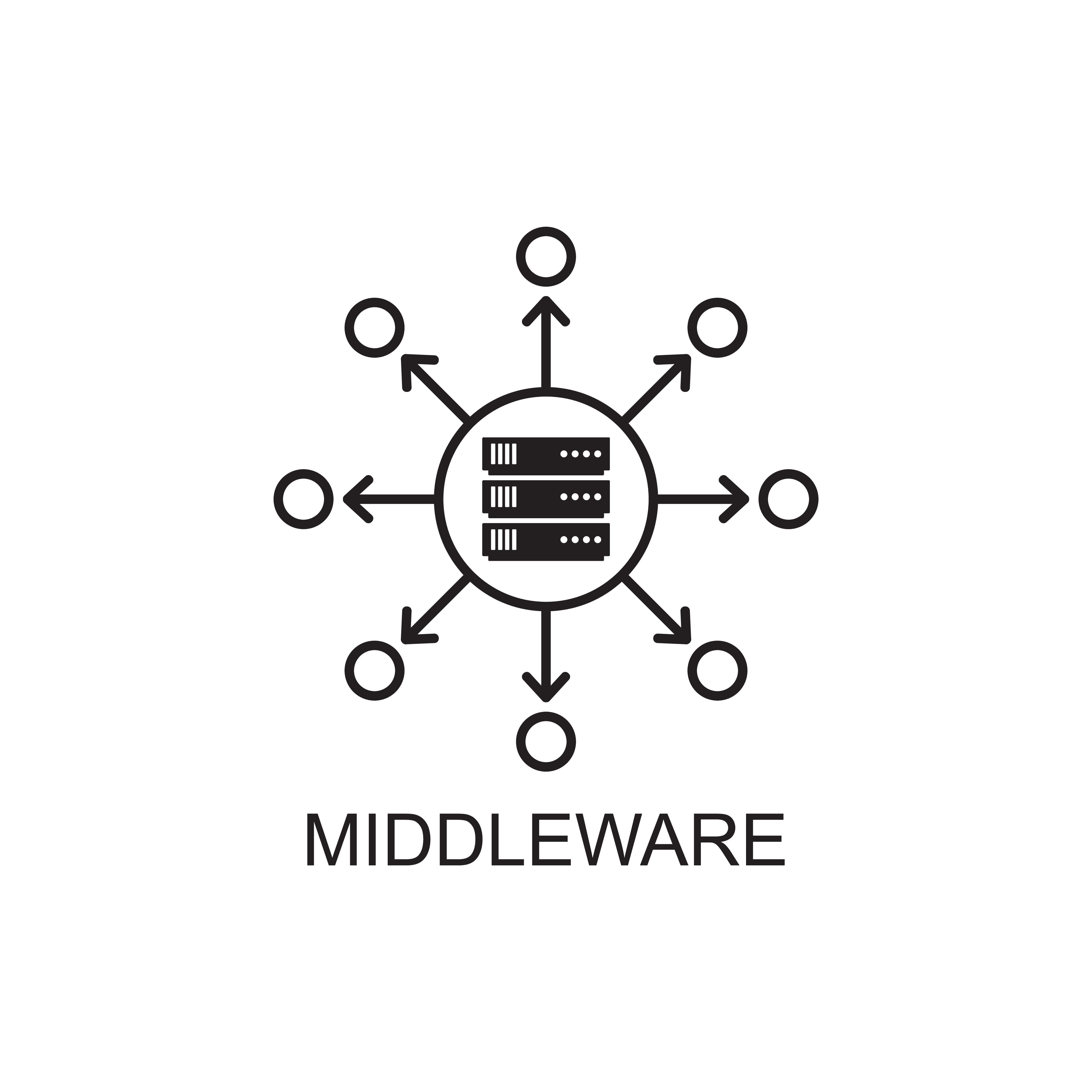
Most enterprise modernization journeys now converge on two strategic destinations, often used together depending on the application landscape.
- SAP Integration Suite
For enterprises with a strong SAP footprint, SAP Integration Suite is the natural successor to PI/PO. Running on SAP Business Technology Platform, it supports the integration patterns SAP customers depend on, including IDOC, RFC, SOAP, REST, OData, and B2B/EDI scenarios.
Just as importantly, SAP’s innovation focus is now here. Integration Suite is where new capabilities are being built, where SAP’s cloud integration strategy is centered, and where enterprises gain a more unified platform spanning integration, API management, and event-driven connectivity.
For SAP-centric organizations, the business case is straightforward: modernizing onto the platform SAP is actively investing in, reducing legacy overhead, and creating a more scalable foundation for future transformation.
- Azure Integration Services and Logic Apps
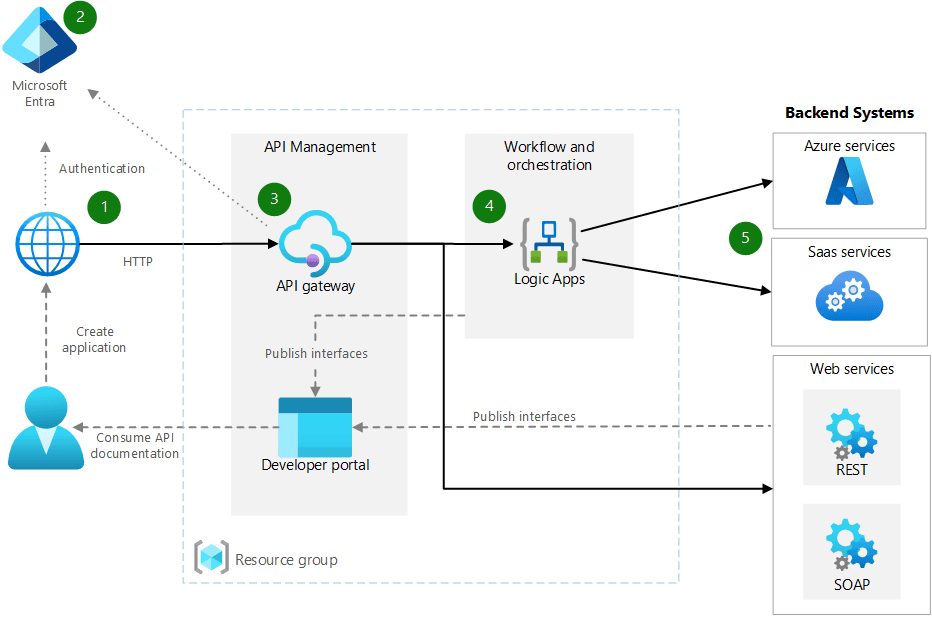
For Microsoft-centric, multi-cloud, or broader enterprise integration estates, Azure Integration Services provides a strong modernization path. Azure Logic Apps replace traditional orchestration with a serverless, consumption-based model. Azure API Management adds governance and exposure control. Azure Service Bus and Event Grid provide scalable messaging and event-driven integration patterns with stronger operational visibility.
This is not an SAP-versus-Azure choice. Many enterprises use SAP Integration Suite for SAP-heavy scenarios and Azure Integration Services for the wider enterprise integration fabric. In practice, that composable model reflects how modern estates operate.
What a Successful Migration Looks Like
The biggest mistake in legacy middleware modernization is trying to move everything at once. The most successful programs treat migration as phased capability delivery, not a single cutover.
A disciplined approach usually follows four steps:
-
Start with discovery. Inventory every active interface, understand what it does, measure its business criticality, and identify dependencies. Most organizations underestimate this step, especially in estates where integrations have accumulated over many years.
-
Prioritize by value and risk. Not all interfaces matter equally. High-volume, lower-complexity integrations are often the right place to begin because they reduce platform risk early while building delivery confidence.
-
Run parallel where it matters. Critical integrations such as payroll, order management, and financial postings should not be switched over casually. Running old and new platforms in parallel long enough to validate outcomes is essential.
-
Automate regression testing. Migration programs fail when testing is left too late or handled manually. Establishing baseline behavior and validating equivalence through automated regression is one of the safest ways to reduce business risk.
The Business Case Is Stronger Than It Looks
Migration decisions often stall because the cost of change is obvious, while the cost of doing nothing is spread across infrastructure, specialist support, operational drag, and delivery delays.
For SAP PI/PO estates, the annual cost of on-premises infrastructure, licensing, and specialist dependency can already be substantial. A phased move to SAP Integration Suite often compares favorably when measured against multi-year carrying cost, especially once productivity gains, reduced operational risk, and faster delivery are included.
The same applies to BizTalk. Consumption-based cloud integration models shift spend away from idle server capacity and toward actual usage. Instead of paying for peak-load infrastructure that sits underused most of the time, enterprises can scale more efficiently and improve responsiveness during demand spikes.
When automation is introduced into discovery, mapping, migration, and validation, the economy improves further. What previously looked like an expensive, high-risk program becomes a more structured and commercially viable modernization initiative.
Migration Is a Strategy Decision
Middleware modernization should not sit in a technical backlog waiting for a spare budget. It belongs in the same conversation as ERP modernization, cloud strategy, and AI enablement.
Integration middleware is part of the operating fabric of the business. When that layer is brittle, expensive, and hard to evolve, every transformation program built on top of it inherits those same constraints. Moving to SAP Integration Suite, Azure Integration Services, or a combination of both is not just a technology refresh. It is a strategic step toward faster delivery, cleaner connectivity, lower operational drag, and a stronger platform for future growth.
The enterprises that exit legacy middleware in 2026 will move faster, integrate better, and spend less time carrying the weight of yesterday’s architecture.
The sunset on legacy middleware has been visible for some time. In 2026, the right move is no longer to wait — it is to modernize and build what comes next.
Tarento iVolve is an SAP-certified migration framework designed to help enterprises move from SAP PI/PO, Neo CPI, BizTalk, webMethods, and other legacy integration platforms to SAP Integration Suite faster and with lower migration effort.


5 Pragmatic Engineering Practices That Build High-Performing Teams