How Plasman Migrated SAP CPI to SAP Integration Suite in 12 Weeks with Zero Business Disruption

In just 12 weeks, Plasman AB — a global automotive manufacturer operating across 10 countries — completed a fully validated SAP Cloud Platform Integration (Neo) to SAP Integration Suite (Cloud Foundry / BTP) migration using MINT, achieving 90–95% automation and zero disruption to its partners, customers, or business operations.
Migration Scope (Production Landscape) — As Migrated
- 115 productive iFlows
- 3 Value Maps
- 15 productive Message Queues
- 18 Number Range Objects
- 18 Security Materials
- 10 Key Store Entries
Client & Context
Plasman is a globally integrated automotive manufacturer and technology company headquartered in Sweden, with operations across Canada, the US, Mexico, Belgium, Portugal, the Czech Republic, Germany, Norway & Japan.
SAP underpins cross-border data exchange, supplier integration, production workflows, and partner connectivity. That made the integration layer a business-critical dependency — not something that could tolerate a risky “big bang” cutover.
Business Challenge
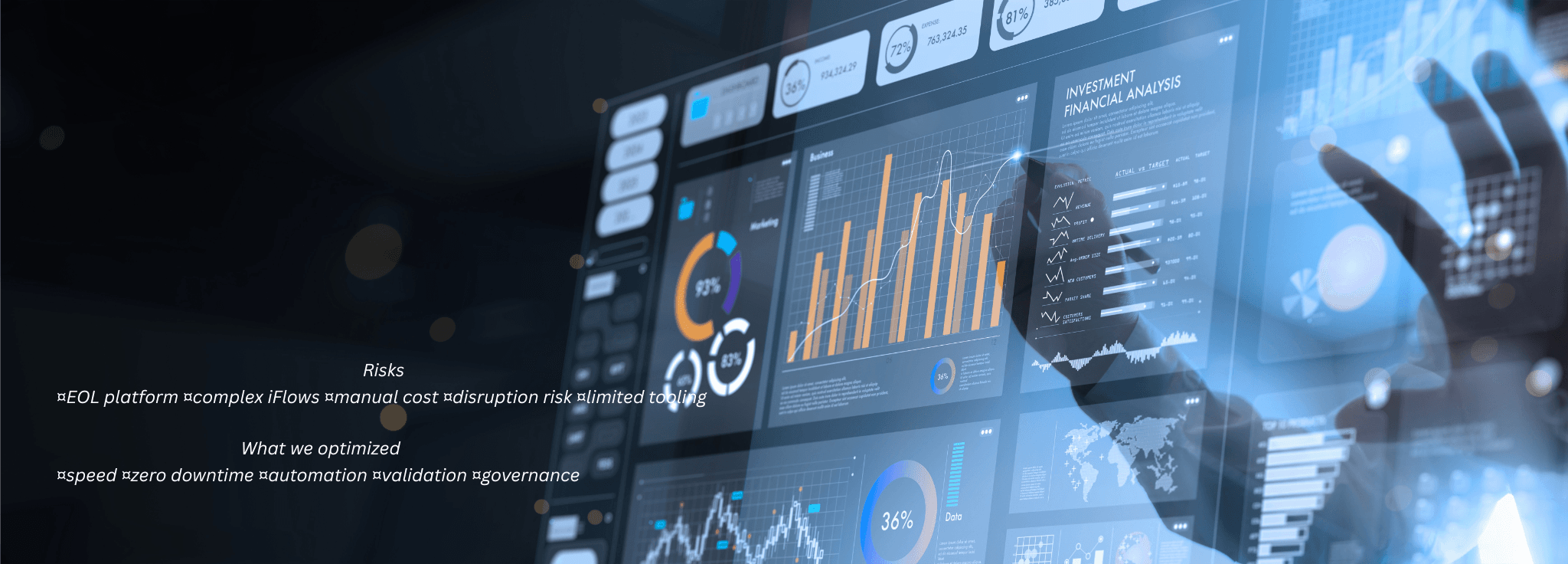
SAP’s announcement of the deprecation of its Neo Cloud Platform Integration (CPI) environment left organizations with no choice but to migrate to the new BTP Cloud Foundry (CF) Integration Suite. For Plasman, this was more than a routine upgrade: it presented a genuine operational risk given the complexity of its integration landscape and the critical role those integrations play in day-to-day business.
- End-of-life platform risk: SAP Neo CPI was approaching deprecation, creating compliance exposure and long-term support risk for Plasman’s integration estate.
- Complex iFlow landscape: Plasman has a substantial portfolio of iFlows with dependencies, custom logic, and multi-directional connections to partners and systems across its global footprint.
- High cost of manual migration: Traditional migration approaches would require extensive consultant-led manual effort, translating into long timelines and significant project spend.
- Risk of operational disruption: A poorly executed migration could cause outages in business-critical data flows — directly impacting production, logistics, and partner relationships.
- Limited migration tooling: At the outset, no off-the-shelf tooling existed to automate and validate the migration at scale; this gap had to be addressed as part of the project.
Objectives & Success Criteria
Together with Plasman, clear goals were defined for the migration programme:
- Complete the full migration within 12 weeks without disrupting business operations, customer data flows, or partner integrations.
- Achieve zero planned or unplanned downtime throughout the migration lifecycle.
- Automate the migration process to the maximum degree possible, reducing manual effort and human error.
- Ensure every iFlow batch passed full SIT and UAT before promotion to production.
- Maintain transparent governance and communication with all stakeholders worldwide.
- Create a modern, cloud-native integration foundation on BTP CF that supports future digital initiatives — including event-driven architecture and SAP Event Mesh.
Why MINT?
MINT — Migration INtelligence Tool — is a purpose-built SAP-aligned automation engine designed specifically for CPI Neo to BTP Cloud Foundry migrations. Built on SAP’s official migration APIs and Postman collections, MINT was the only tool capable of addressing the full scope of Plasman’s migration needs: automating artifact migration, resolving dependencies, managing credentials securely, and providing end-to-end visibility through a live progress dashboard.
- SAP-native approach: MINT is built atop SAP’s official migration APIs — ensuring full compatibility, integrity, and alignment with SAP’s own migration standards.
- End-to-end automation: From discovery and assessment through to cutover validation, MINT automates every stage of the migration lifecycle.
- Secure artifact handling: MINT handles the migration of credentials, OAuth configurations, certificates, and value mappings with built-in security controls.
- One-click migration accelerators: Automated conversion of iFlows and configurations that would otherwise require days of manual rework per batch.
- Real-time progress dashboard: Stakeholders and project teams maintained full visibility into migration status, blockers, and success metrics throughout the engagement.
- Future-proof architecture enablement: MINT supports migration paths to SAP Event Mesh and event-driven architectures, ensuring the transition delivers lasting value beyond the immediate project.
Approach & Methodology
The engagement followed a phased, risk-aware methodology designed to deliver a predictable, zero-noise migration for Plasman — keeping business operations running smoothly at every stage.
Phase 1: Assessment and migration blueprint
The team started by understanding the real integration landscape — not just what was documented.
- Automated discovery and inventory of iFlows and related artifacts
- Stakeholder workshops to map business flows, dependencies, and critical paths
- A structured migration blueprint defining scope, sequencing, risk, and batching strategy
Outcome: Plasman had a risk-quantified roadmap before any production-impacting changes began.
Phase 2: Batch-wise migration and validation
Instead of a high-risk “big bang,” Plasman migrated in logical batches. This reduced blast radius made testing focused and kept operational risk low.
- iFlows grouped by dependency mapping, process criticality, and risk profile
- 90–95% automation of migration steps via MINT, minimizing manual intervention
- Full SIT + UAT for each batch — no promotions with open defects
- Issues resolved within each batch cycle before moving forward
Outcome: Controlled progress without surprise outages, while keeping velocity high.
Phase 3: Cutover, hyper care, and stabilization
Cutover planning was treated like an engineering release: scripted, owned, and observable.
- Cutover runbook with clear steps, owners, and rollback triggers
- Continuous monitoring during cutover using MINT’s progress dashboard
- Structured hypercare period post go-live with rapid issue response
- Regular stakeholder updates and clear escalation paths (“no surprises” operating model)
Outcome: A precise go-live with uninterrupted partner data exchange and strong internal confidence.

Overcoming Key Challenges
-
“No tooling that automates at our scale”
At the outset, Plasman needed automation beyond basic scripts. The solution was developing and using MINT’s migration API pack and accelerators to systematically reduce manual effort. -
“High dependency complexity”
MINT’s dependency-aware batching enabled teams to isolate and migrate groups safely, rather than chasing crossflow breakages late in the cycle. -
“Zero tolerance for disruption”
Batch-wise migration plus strict SIT/UAT gates ensured issues were found early, fixed within the batch, and never leaked into production. -
“Stakeholder confidence across geographies”
The dashboard-driven governance model created shared visibility and prevented escalations by keeping progress and risks transparent.
Results & Impact
Quantitative outcomes
- 12-week delivery: Full end-to-end migration completed within the agreed timeline
- 90–95% automation: Significant reduction in manual effort and consultant dependency
- Zero business disruption: No impact observed by customers, partners, or operations
- Zero escalations: Delivery stayed within the project governance model
- 100% test coverage: Every batch completed SIT and UAT before promotion
Qualitative outcomes
- A modern, cloud-native integration platform on SAP BTP Cloud Foundry, aligned with SAP’s direction
- Improved visibility and control of the integration estate (progress + monitoring)
- A repeatable playbook recognized internally as a “template” for future SAP migration programs
- Foundation ready for further modernization, including event-driven patterns and SAP Event Mesh initiatives
Before vs. After
| Dimension | Before Migration (Neo CPI) | After Migration (BTP Integration Suite) |
|---|---|---|
| Platform status | SAP Neo CPI — approaching end of life | SAP BTP Cloud Foundry — current & supported |
| Migration effort | Manual, slow, error-prone | 90–95% automated via MINT |
| Business disruption | High risk of outages during migration | Zero disruption — no escalations |
| Visibility & control | Limited progress tracking | Real-time dashboard — full transparency |
| Downtime | Unpredictable | Zero planned/unplanned downtime |
| Future readiness | Legacy, limited scalability | Event Mesh-ready, cloud-native, scalable |
What Plasman Says
“A ‘template project’ as we say in Sweden — a template for all projects to come. Thank you for the great news. Fantastic to see the progress and constant results. Thanks again for a job well done.”
— Jonas, IT Director — Plasman AB
What’s Next
With the integration layer running on BTP Cloud Foundry, Plasman is positioned for the next wave of digital capabilities:
- Adoption of SAP Event Mesh and event-driven integration patterns
- Expansion of BTP-native capabilities (automation, analytics, and intelligent integration scenarios)
- Reuse of the MINT-driven migration methodology for future workstreams
- Continuous optimization on the new SAP BTP platform
Ready to Migrate with Zero Disruption?
If you’re planning an SAP CPI Neo to SAP Integration Suite migration and need to keep business-as-usual throughout, an automation-first, batch-governed approach can help you move faster with less risk.
- Talk to our SAP Migration Experts
- Send a message to hello@tarento.com to request a migration readiness assessment
12-week CPI Neo migration: 115 iFlows, 90–95% automation, zero downtime

Stop Course Completion—Build Capability Impact