Understanding Users: How Structured Discovery Aligns IT, Business, and End Users

Only 30% of digital transformation programmes achieve their intended business outcomes — and misalignment between what is built and what users actually need is consistently cited as a primary cause.
When user research is skipped or rushed, the damage shows up in predictable ways. Adoption slows. Workarounds increase. Support tickets pile up around flows that looked good in workshops but fail in daily use. The system may go live on time, yet business KPIs still stall.
That is usually not just a technology problem; it is a discovery problem. Teams move into solutioning before they understand the people, context, and constraints the solution must serve. IT delivers what was specified. Business approves what was scoped. And users find ways around both.
This is where structured user research matters. It is not a late-stage validation step or a box to tick before launch. It is the process that helps IT, business stakeholders, and end users build a shared, evidence-based understanding of what needs to be built and why.
Why Structured Discovery Matters in Enterprise Digital Transformation
Enterprise systems are different from consumer products. Users often cannot opt out. Adoption is mandatory. That creates a risky assumption: people will simply adapt to whatever the system demands.
In reality, they rarely do. Productivity drops when tools add friction instead of removing it. Errors rise when workflows do not match how people actually think and work. Morale suffers when employees feel the system was designed without understanding their reality. These are not soft issues. They lead directly to rework, delayed ROI, and higher support costs.
That is why user research should be treated as a strategic investment, not a phase to cut when timelines tighten. The cost of weak discovery is not paid during the discovery process. It is paid later: across sprints, deployments, and support cycles.
Good discovery also exposes something requirements documents often miss: the gap between what stakeholders think users do and what users really do. Once that gap becomes visible, priorities shift. Teams stop building in the wrong direction.
The User Research Framework: What Enterprises Need to Know
Attitudinal research captures what users say, think, and feel. Interviews, surveys, and diary studies help teams understand mental models, motivations, and self-reported behaviour.
Behavioural research captures what users actually do. Usability testing, field studies, analytics, and session observation reveal real patterns of use, including the workarounds and friction points users may not report.
Generative vs. evaluative research is another important distinction. Generative research helps teams explore the problem before a solution exists. Evaluative research assesses a design or product once it is in use. Both matter. Their sequence matters too.
A strong research programme needs all three dimensions. Attitudinal methods explain why users behave the way they do. Behavioural methods show what they actually do. Generative methods open up the problem space. Evaluative methods test whether the chosen solution works. If a team relies on only one lens, it gets an incomplete picture. In enterprise environments, incomplete pictures lead to misaligned products.
How to Build User Research Into Enterprise Projects From Day One
-
Define research goals before defining requirements. Research without clear questions produces interesting observations but no direction. Before running interviews or observations, agree on what the team needs to learn and how that learning will affect decisions.
-
Interview users and stakeholders separately. Stakeholders understand business goals, constraints, and risks. End users understand reality, friction, and daily work. When those perspectives are mixed in one session, both become diluted.
-
Use open-ended questions to surface the unexpected. Closed questions confirm what researchers already suspect. Open questions reveal what the team did not anticipate. That is where the most valuable insight usually sits.
-
Complement interviews with direct observation. What users say and what users do are often different. Field studies and usability sessions reveal the workarounds, pauses, and informal fixes that interviews alone cannot uncover.
-
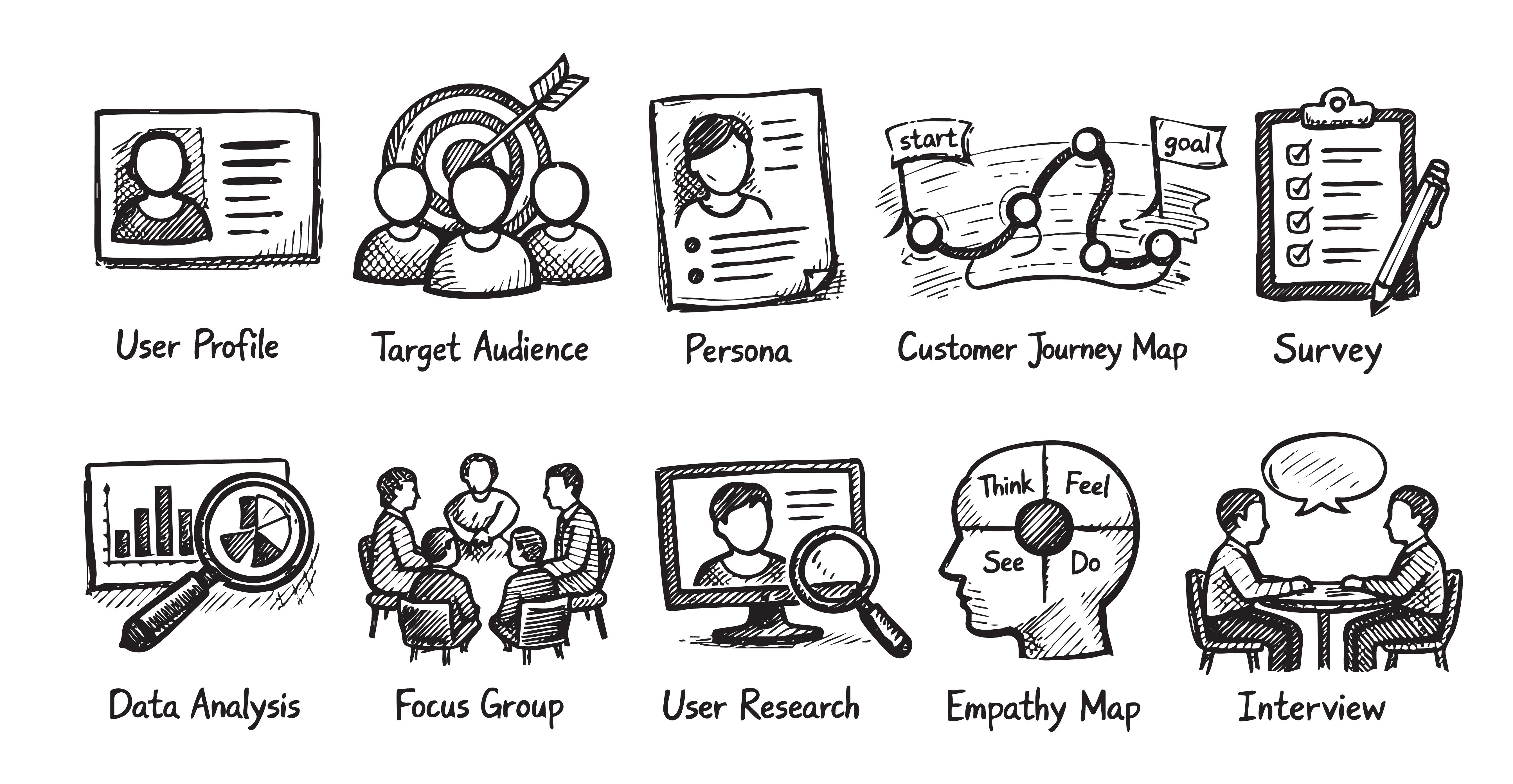
Synthesise findings into shared artefacts. Research does not align teams if it stays in notes. Journey maps, empathy maps, and user-need statements turn findings into a shared reference that both IT and business can use throughout delivery.
Enterprise Discovery Checklist Before Requirements and Solutioning
Before moving from discovery to solutioning, check that you can answer these questions clearly:
- Have we spoken to both end users and business stakeholders?
- Do we understand the current workflow, not just the intended one?
- Have we observed users doing the task in context?
- Can we name the top friction points in the user journey?
- Do we know where business goals and user needs align or conflict?
- Have we translated findings into artefacts that the delivery team can use?
- Can we explain how this research will change scope, priorities, or design decisions?
If the answer to several of these is no, the team is probably solutioning too early.
A Real-World Example of Structured Discovery Creating Measurable Value
Scenario: A logistics company is preparing to replace its warehouse management system. Before procurement begins, the team runs four weeks of structured discovery.
| Dimension | Key Finding | Action Taken |
|---|---|---|
| User interviews | Warehouse staff relied on a shadow spreadsheet the old system could not produce | New system scoped to include that report natively |
| Field observation | Gloves prevented touchscreen use at 60% of workstations | Hardware specification changed to barcode-first input |
| Stakeholder interviews | Finance needed real-time inventory valuation; IT had assumed batch reporting | Integration architecture revised before vendor selection |
| Open-ended questioning | Staff associated "system changes" with past job losses | Change management programme added to implementation plan |
Outcome: Adoption in the first three months exceeded projections by 40%, and post-launch support tickets were less than half of what the previous implementation had generated at the same stage.
Design Principles That Strengthen Discovery-Led Development
When research is done well, it improves design decisions across the full product lifecycle. These principles help keep that value intact.
- Empathy before assumption — Treat every unstated belief about user behaviour as a hypothesis, not a fact.
- Separate the problem from the solution — Discovery is for understanding the problem. Starting solution design too early narrows the space before the team has earned that focus.
- Represent users in every planning room — Personas, journey maps, and direct user quotes should show up in sprint planning and stakeholder reviews, not just in research readouts.
- Balance attitudinal and behavioural evidence — Use what users say to understand intent. Use what they do to validate it.
- Iterate research, not just design — User context changes over time. Research that ends at launch leaves the product calibrated to the past.
Discovery should not shape only the first phase of a project. It should influence how the team works throughout the lifecycle.
FAQ: User Research and Structured Discovery
1. What is the difference between a user interview and a usability test?
A user interview captures what users think, feel, and report about their experience. A usability test observes what they do while using a design or product. Both are useful, but they answer different questions.
2. When is the right time to conduct user research in an enterprise project?
As early as possible, ideally before requirements are written. Research done after a solution is scoped can refine it, but it cannot fundamentally redirect it.
3. How many users do I need to interview to get useful insights?
For qualitative discovery, five to eight participants from a consistent segment is often enough to reveal major patterns. The goal is depth and repetition of themes, not large sample size.
4. What makes a question leading, and why does it matter?
A leading question points users toward a specific answer. For example, “Was that confusing?” suggests that it was. This introduces bias. Open alternatives such as “What did you make of that?” give users room to answer honestly.
5. How do we align business stakeholders around user research findings?
Present findings in simple, reusable artefacts such as journey maps, user-need statements, and direct quotes. Better still, invite stakeholders to observe research sessions themselves. Seeing real users changes perspectives faster than reading reports.
6. Can user research be done on a compressed timeline?
Yes. A focused sprint of five user interviews and one round of observed task sessions can produce useful direction in under two weeks. The trade-off is reduced coverage, but even fast research is better than making decisions without evidence.
At Tarento, we start with one live workflow. Interview the people who run it. Observe it in practice. Map the gap between what the process is meant to do and what it actually does. Once that gap becomes visible and shared, the real work of digital transformation can begin. Learn more->


Distributed Systems Performance and Scaling: How Engineering Leaders Make Better Architecture Decisions